 Gloria Davis
Winter survival and a ripe harvest are two different tests for a fruiting vine. The vines of hardy kiwi can endure impressive cold, yet tender spring growth, the length of summer, and the timing of fall frost all shape a harvest. Kiwis of the Arctic type are particularly cold tolerant, but they also need a suitable season and a pollination partner.
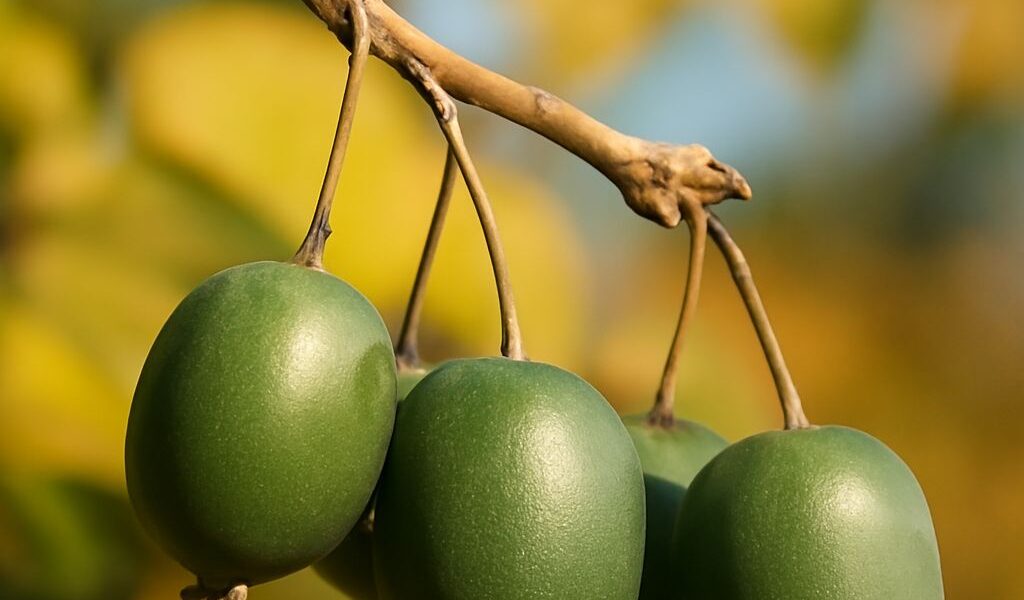
The fruit is small, smooth-skinned, and often eaten whole. Behind that simple pleasure is a long-lived climbing plant that needs room, careful pruning, and a support strong enough to carry its mature weight. Choose the plant and its place together, before bringing either home.
Arctic kiwi and its relatives
Two species are particularly relevant to cold-climate gardeners. Actinidia arguta, often called hardy kiwi or kiwiberry, is vigorous and produces relatively large berries. Actinidia kolomikta, often called Arctic Beauty, is generally the more cold-hardy species, with smaller fruit and sometimes strikingly variegated leaves. Both are different from the familiar fuzzy supermarket kiwi, A. deliciosa.
In Minnesota, the University of Minnesota Extension lists A. kolomikta for USDA zone 3 and A. arguta for zone 4. These are broad guides to winter survival, not a forecast of fruiting at a particular address. Even in a suitable hardiness zone, a short season or spring frost can limit fruiting. A sheltered garden with a long autumn and one in an exposed frost pocket can behave quite differently within the same zone.
For an A. arguta choice, ‘Ananasnaya’ is a female cultivar with sweet fruit and vigorous growth. ‘Issai’ is a smaller-growing, self-fertile selection, though a compatible male may improve its fruit set. For A. kolomikta, ‘Krupnopladnaya’ is a fruiting cultivar listed by the University of Minnesota. Confirm the sex and identity on the nursery label: a cultivar name or colorful foliage alone should not be treated as proof that a plant will bear fruit.
Plan for flowers as well as fruit
Most plants have male and female flowers on separate individuals. A female needs pollen from a compatible male flowering at the same time; the male supplies pollen but does not bear the crop. Choose labeled plants of the same species and ask the nursery which male overlaps your female’s bloom. For example, New Hampshire Extension recommends ‘Meader Male’ for the female A. arguta cultivars ‘Ananasnaya’ and ‘Geneva 3’ in its Northeast recommendations.
Allow space for both plants and for pollinators to visit the flowers. If space is limited, ‘Issai’ offers a self-fertile option, but its zone rating and ripening season still need to suit the site. Vines of Arctic kiwis require the same attention to sex and bloom timing; an attractive male is not a substitute for a fruiting female.
Give the canopy a durable home
A hardy kiwi vine can become a substantial woody plant. Install a sturdy pergola or trellis before planting, with anchored posts and wires capable of supporting a mature canopy, wet foliage, and fruit. Keep it away from trees and shrubs it could climb over. Check local invasive-plant guidance before planting, especially near natural areas, and remove escaped seedlings where appropriate.
Give A. kolomikta partial shade and protection from afternoon sun; A. arguta tolerates more sun. For either species, choose well-drained soil and a place within reach of water. Roots suffer in waterlogged ground, while young plants need regular moisture as they establish. A layer of mulch helps moderate soil moisture around the climbing vines of hardy kiwis; keep it clear of the trunk. Water during dry spells rather than leaving the soil continuously saturated.
When growing hardy kiwi, train one strong shoot upward as the trunk, then guide permanent arms along the support. Prune mature female plants in winter to renew fruiting wood; flowers develop on new shoots arising from the previous year’s canes. Prune mature male plants immediately after flowering, preserving shoots for the following season’s flowers. Trim overly long shoots during summer without removing too much growth. The Oregon State pruning guide illustrates training and explains which wood to retain. Hardy kiwis’ vines benefit from this annual attention because an unpruned canopy becomes difficult to reach and manage.
Read the season, not just the zone
Dormant wood can tolerate cold that would kill new shoots. A late spring freeze can damage emerging growth or flowers, reducing that year’s crop even when the roots and trunk survive. Avoid low spots where cold air settles, and consider whether a late frost is common after bud break.
Ripening also takes time. In Minnesota trials, A. kolomikta generally ripens from mid-August to mid-September, while A. arguta ranges from late August into mid-October. Local weather and cultivar change those dates. Compare the expected harvest window with your usual first fall frost; if autumn comes early, an arctic kiwi vine may fit the season better, though no single date ensures a crop.
Many plants take several years to mature. As the framework fills, you will learn where vigorous shoots emerge and how much fruit the site can bring to maturity. Check berries as harvest approaches: ripe fruit softens gently, and fruit on a plant may not all ripen at once. Each season’s pruning and observations make the next season’s choices clearer.