 Gloria Davis
It is easy to imagine every dahlia as a towering plant with a dinner-plate bloom. In fact, dahlia flowers range from small, open disks to tightly layered spheres, on plants suited to very different spaces. Their height and flowering season matter as much as their color.
When buying dahlias to plant, begin with the place they will grow. A compact plant may fit a sunny container, while a tall cutting variety needs room and support in a garden bed.
Dahlias for Sale: Read Beyond the Photograph
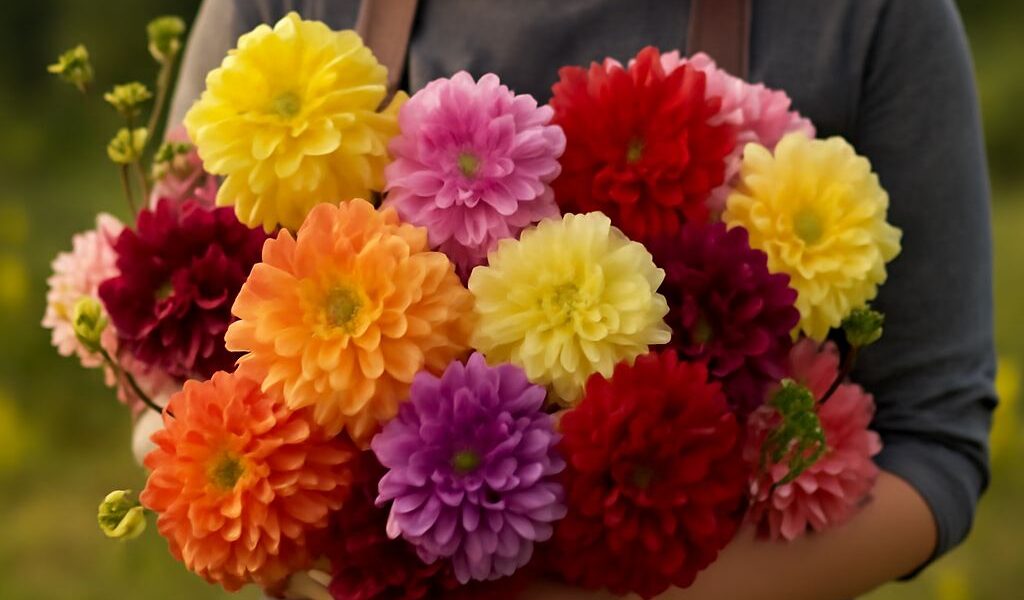
A catalog photograph shows the color and form of dahlia blooms, but the description should also give the cultivar name, mature height, expected flower size and planting needs. Among dahlias, flowers with an open center have a different effect from densely layered decorative blooms. Decide whether you want flowers to cut, a low border or a focal point visible across the garden.
Single and collarette types expose a central disk; pompons form neat rounded heads; cactus types have narrow, often rolled petals. North Carolina State Extension lists these and other forms in its dahlia guide. Individual cultivars vary, so check a named variety’s description rather than assuming its height from flower shape.
Consider the colors beside existing plants as well as those in a catalog image. A pale dahlia flower can stand out against dark foliage, while a saturated red or orange may become the strongest feature in a small bed. Photographs are a guide: light and growing conditions can influence the appearance of a bloom.
Fit the plant to the site and season
Dahlias grow best with plenty of sun and well-drained soil. In very hot areas, morning sun with some afternoon shade can help; University of California Master Gardeners recommends that arrangement for extremely hot locations. If water stands in the bed after rain, improve the site or choose a suitable container with open drainage holes.
Check mature height and width before ordering. Tall plants need space for air and a stake or other support; place supports at planting time so you are less likely to damage roots later. A compact cultivar is easier to accommodate in a pot, though it still needs enough root space and regular moisture checks. The dalhias you choose should fit the container at their expected adult size, not merely look small at the nursery.
The season of flowers on dahlias also shapes the choice. Dahlias generally flower from summer into fall until frost, with timing varying by cultivar and climate. A short-season garden may benefit from an early-flowering variety or a started plant. Ask a local nursery when its varieties typically begin flowering in your area, then compare that window with your likely first frost.
Tubers or growing plants?
Tubers are dormant storage roots, usually sold for spring planting. A named tuber can be a practical way to grow a particular cultivar, and a specialist’s catalog may offer useful comparisons of height, color and form. A dahlia plant sold in a pot gives you a visible stem and leaves and can be helpful if you have limited time before the outdoor season. Check the label on either purchase to confirm the cultivar and what is included.
A viable dahlia division needs a tuber body, an intact neck and a piece of crown with an eye, the growth point. Iowa State University Extension explains this structure. An eye may be small or dormant at purchase, so ask the seller how they assess viability and what their replacement policy covers. Avoid tubers that are soft, moldy or badly damaged.
For a potted plant, look for firm stems and healthy leaves, check the undersides for pests, and avoid specimens with severe wilting or signs of rot. If a plant is flowering, its color and shape are visible, though a good label still matters for identification. The dahalias in a mixed selection may differ in size and appearance, so choose named stock when consistency is important.
Where to look and what to ask
Local nurseries can offer plants suited to the regional season and advice on planting dates. Specialist growers and local dahlia societies may sell named tubers and provide descriptions or growing notes. For example, Swan Island Dahlias maintains an online catalog, and its FAQ describes its labeled tubers. Selection and shipping dates change, so check the seller’s current listing rather than assuming a variety is available.
When comparing dahlias for sale, look for a clear cultivar name, the size or type of material supplied, shipping timing and the policy for damaged or nonviable stock. Ask whether the stated height refers to the mature plant and whether a pictured mix contains named varieties. A nearby grower may also know which choices flower reliably before local frost.
Plan the purchase through planting
Buy for a site ready after the danger of frost has passed and the soil has warmed. Keep dormant material according to the seller’s directions until planting time. Plant at the depth and spacing recommended for the cultivar, with room for its mature growth, and protect tender new shoots from frost. Once growing, maintain moisture without leaving the soil saturated; remove spent flowers to encourage further blooms.
In cold regions, plan where to store lifted tubers after frost if you want to keep them for another year. For a small sunny container, select a labeled compact plant or healthy tuber of a suitable cultivar; for a spacious cutting bed, choose named, sound tubers with heights and bloom times that fit the supports and the length of your season.