 Gloria Davis
What does a dahlia need before its first shoot appears? A sound tuber with a growing point, warm soil and room to develop roots. Planting a dahlia tuber at the right depth is only the beginning: the young plant also needs appropriate support and moisture as it grows toward its summer display.
Growing Dahlias Begins With a Healthy Tuber
Dahlia planting material is often sold as a “bulb,” but it is a tuberous root, a storage organ connected to a crown. The eye, or growing point, develops on the crown near the neck; a plump root with no viable eye cannot produce a new shoot on its own. Oregon State University Extension recommends firm tubers with an intact neck and at least one eye.
Inspect each piece before planting. A small eye may look like a bump rather than a long sprout, and it can be hard to see early in the season. Avoid pieces that are soft, rotten or have a broken neck. If you cannot find an eye on a purchased division, ask the supplier before discarding it; a dormant bud can be inconspicuous.
Knowing how to plant dahlia tubers also means matching the variety to its place. Tall stems carrying large flowers need more space and support than compact bedding selections. Read the label for expected height and spread, and plan a support before leaves hide the ground.
Wait for warmth and choose a suitable site
Dahlias are frost-tender. Plant outside after the danger of frost has passed and the soil has warmed, rather than following the same calendar date in every region. Cold, wet ground can delay growth and encourage rot. If rain has left the soil sticky and saturated, wait until it drains and can be worked without compaction.
Choose a sunny site with well-drained soil. Space matters as much as the size of the planting hole: Oregon State suggests about 2 to 3 feet between plants, depending on their mature size. Good spacing gives the foliage room and makes it easier to inspect and tend the plants. A large variety at the edge of a crowded path will soon require more room than its bare tuber suggests.
If you are growing dahlias in containers, use a pot large and stable enough for the mature selection, with drainage holes and a suitable potting mix. A heavy flowering crown can tip a small pot, and a container may dry faster than garden soil. Have a sheltered, frost-free place ready if you intend to save the tubers over winter.
Plant with the eye near the top
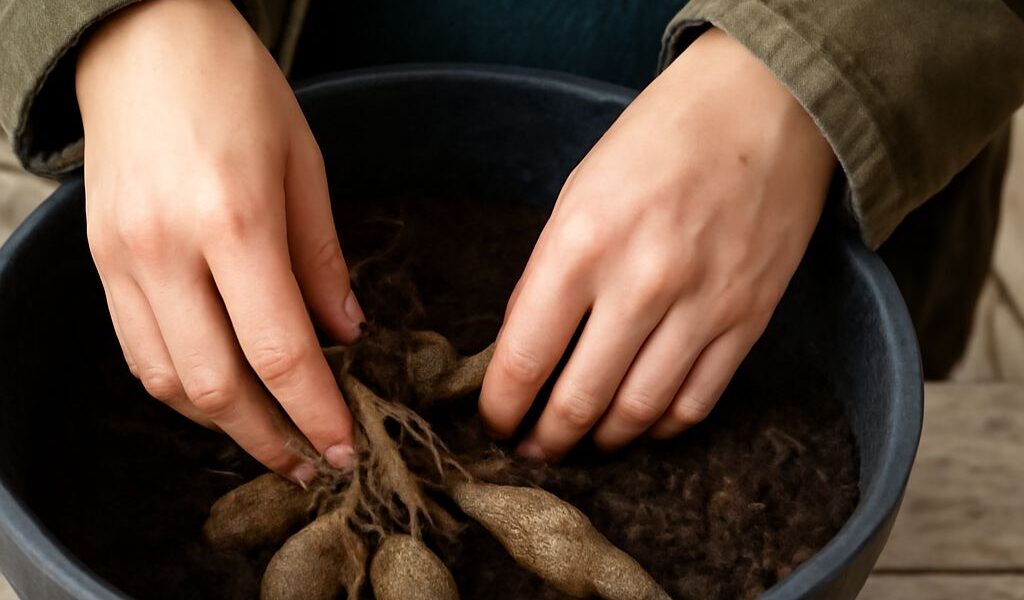
For gardeners asking how to plant dahlia bulbs, the “bulbs” are the tuberous roots described above. Oregon State’s planting advice places the tuber about 6 inches deep, with the eye facing up. Lay it in the hole with the crown and eye oriented upward, cover with loose soil and mark the location. Depth can vary with conditions and local advice; in heavy, poorly drained ground, improve the site rather than burying a tuber in a wet pocket.
For planting dahlias that will grow tall, place a sturdy stake next to the planting position before covering the tuber. Keep the eye end near the stake without driving the stake through the tuber. Installing support now is easier than pushing a post into a mature root system later. As the stem grows, tie it loosely with soft material and adjust the tie so it does not constrict the stem.
Water at planting only as needed for the actual soil conditions. The unrooted tuber should not sit in saturated ground. In already moist soil, wait and watch for shoots rather than repeatedly soaking a bare bed. If the soil becomes very dry, a light application can prevent it from remaining dusty; adapt to local weather and the condition of the soil.
Care for shoots and flowers
Once shoots emerge and leaves develop, check soil moisture regularly. Water deeply enough to reach the root area when needed, then allow excess water to drain. Frequency changes with rainfall, heat and soil type. Oregon State advises even watering after establishment and cautions against soggy soil. Mulch can help moderate moisture, but leave space around the young stem and watch for pests beneath it.
As the plant grows, tie tall stems to their supports in stages. Inspect foliage for damage and remove spent flowers down to a suitable leaf or side shoot to keep the plant tidy and encourage further bloom. Use clean tools and avoid moving from a visibly diseased plant to a healthy one without cleaning them.
Fertilizer is not a substitute for light, drainage or water. If growth suggests a nutrient problem, a soil test and local advice can help determine whether feeding is needed. Excessive nitrogen can favor leafy growth at the expense of flowers, so avoid applying large amounts simply to make a plant grow faster.
Prepare for the end of the season
Dahlias flower through the warm season until frost damages the top growth. In regions where winter soil freezes, gardeners who wish to keep tubers can lift them after frost has blackened the foliage, handle them carefully and store them in a cool, frost-free place. Label each variety and check stored material for rot or excessive drying. In milder climates, local conditions and drainage determine whether leaving tubers in the ground is practical.
Through summer, keep the growing plants evenly watered without saturating the soil and adjust supports as stems rise. As the first frost approaches, decide whether your climate calls for lifting and storing the tubers so the cycle can begin again next spring.