 Gloria Glover
As we explore the diverse environments of our planet, it becomes crucial to understand the types of biomes that shape our world. Biomes are large ecological areas on the Earth’s surface, with fauna and flora adapting to their environment. They play a vital role in maintaining the balance of our ecosystems. In this article, we’ll delve into what are the different biomes, their characteristics, and their global significance.
What Are Biomes?
Biomes are distinct biological communities that have formed in response to a shared physical climate. They are defined not only by their climate, flora, and fauna but also by their geographical location. These natural classifications help us understand how life sustains itself in various parts of the Earth, each with its unique environmental conditions.
Major Types of Biomes
Let’s take a look at the major earth biomes:
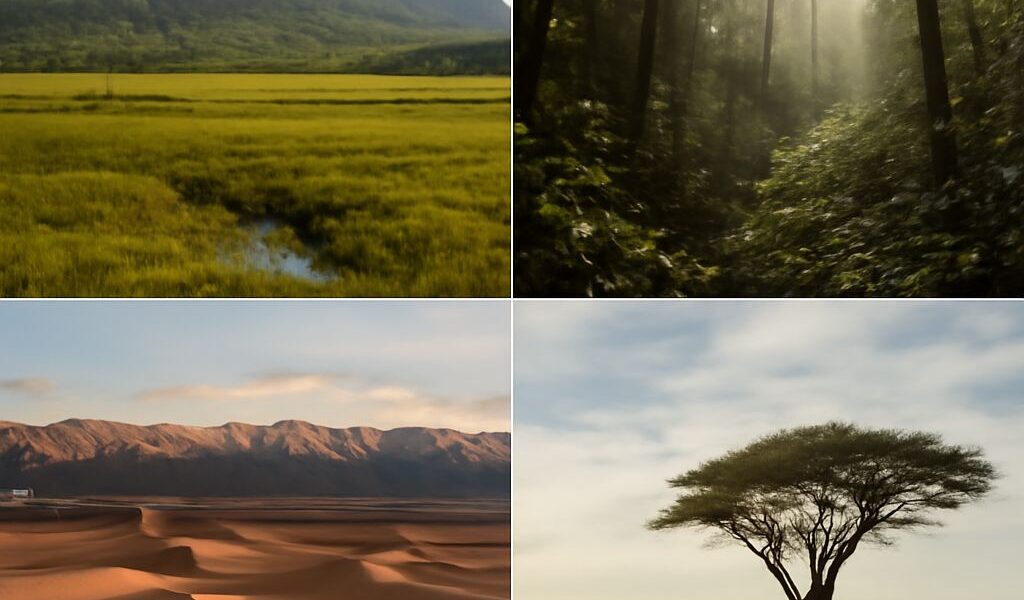
- Forest Biomes: These include tropical, temperate, and boreal forests. They are characterized by high density of trees and a diverse range of plants and animals.
- Desert Biomes: Known for their arid climates, deserts have sparse vegetation but support specially adapted flora and fauna.
- Grassland Biomes: These are found in regions with moderate rainfall and feature grasses as the dominant vegetation.
- Tundra Biomes: Found in the coldest regions, tundras have a short growing season with limited plant diversity.
- Aquatic Biomes: This category includes freshwater and marine environments, supporting an array of aquatic life.
Biomes of the World and Their Characteristics
Biomes exist all over the world, each with its distinct features and adaptations:
- Tropical Forests: Located around the equator, these forests are hot, humid, and teeming with biodiversity.
- Temperate Forests: Found in temperate zones, these forests experience distinct seasons and support a wide range of wildlife.
- Deserts: Covering about one-fifth of Earth’s surface, deserts like the Sahara have extreme temperatures and low precipitation.
- Grasslands: Some famous grasslands include the North American prairies and African savannas, known for vast open spaces and herds of grazing animals.
- Tundras: The Arctic tundra, for instance, is characterized by permafrost, with plant life consisting mainly of shrubs, mosses, and lichens.
- Aquatic Biomes: From the vast oceans like the Pacific to freshwater bodies such as the Great Lakes, these biomes support diverse aquatic ecosystems.
The Importance of Biomes
Biomes play a critical role in sustaining life on Earth. They contribute to the planet’s biodiversity and are integral to processes such as carbon cycling and climate regulation. By supporting various species, biomes provide ecosystem services that are crucial for human survival, such as clean air, water filtration, and resources like timber and medicines.
Understanding the biomes of the world helps us appreciate the delicate balance of life on our planet. As we continue to face environmental challenges, recognizing the significance of each biome becomes more important than ever. By protecting these natural areas, we ensure a sustainable future for both humans and wildlife.