 Gloria Glover
Is that flowering plant in the nursery a low-growing bedding verbena or a shrub that needs room for woody branches? The name alone cannot answer. Flowers of verbena and its relatives may gather in small clusters, but their habits and needs differ. Start with the scientific name on the label, then look at the stems, leaves, and expected size.
Some verbenas are grown as annual bedding plants, replaced after a season in cold climates; others return as perennials or grow as shrubs where winters allow. A plant’s identity is the beginning of its care, not an afterthought.
Verbena Annual or Perennial? Read the Label First
An annual completes its life cycle in one growing season; a perennial can live for more than two years. A tender perennial, however, may be sold and grown like an annual where winter cold kills it. “Annual” on a nursery bench often describes local use, not a universal rule for every garden.
For a verbena annual display, check the plant tag for its full botanical name and cultivar—the named selection within a species or hybrid. Then compare its stated cold tolerance with your USDA plant hardiness zone. The zone reflects average annual extreme minimum temperatures, so it is a starting point, not a guarantee against wet soil, wind, or unusual cold.
If the tag offers only a common name, ask the grower for the botanical name. Write it down or photograph it before planting. A flower color alone cannot tell you whether the plant will trail over a pot, rise above a border, or form a woody framework.
Garden Verbena: Low Mounds and Trailing Stems
Garden verbena, often labeled Verbena × hybrida, includes hybrids commonly grown as annual verbena plants. Depending on the cultivar, stems may mound, spread, or trail. Clusters of small, five-lobed blooms appear in a range of colors, making these plants familiar in hanging baskets and sunny borders. North Carolina State Extension’s garden verbena guide describes the range of habits.
Give these bedding plants full sun and well-drained soil or potting mix. Water after planting while roots establish, then check the soil rather than watering by the calendar: containers dry more quickly than garden beds, while persistently wet roots can suffer. Removing spent verbena blossoms can encourage continued bloom. Allow enough air between plants, especially where humidity is high.
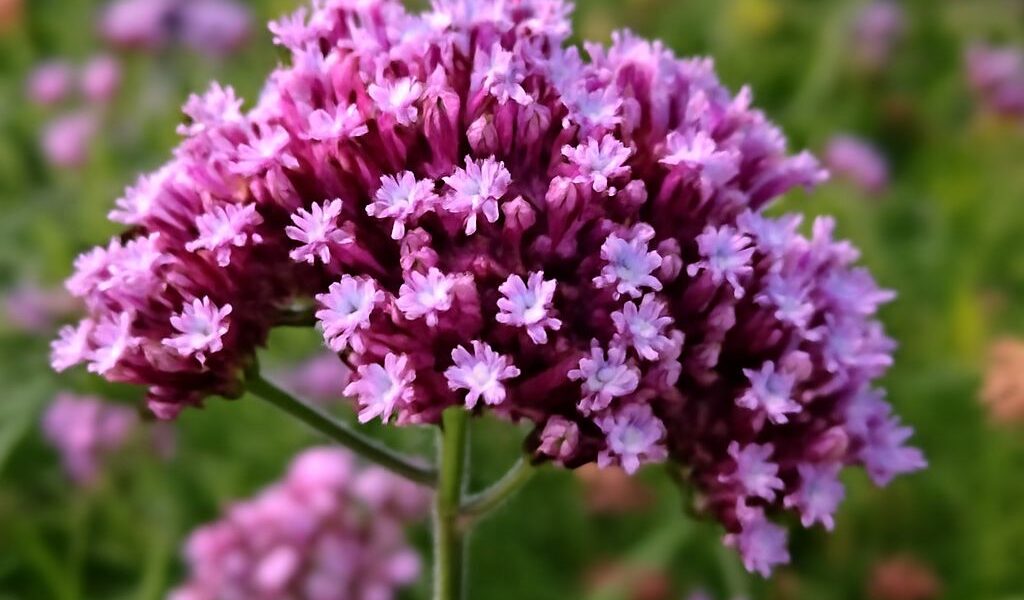
One verbena flower cluster may contain many small blossoms. Its shape is useful for recognition, but look at the whole plant as well; a cluster by itself will not identify a cultivar or predict its winter survival.
Tall Verbena: A Different Silhouette
Verbena bonariensis, commonly called tall verbena, carries small purple flower clusters on slender upright stems, often 2 to 5 feet tall. The flowers of tall verbena rise above its foliage; its open outline lets light and sight pass through a border in a way a compact bedding hybrid cannot. It is a tender perennial that may be grown as an annual in colder areas; see NC State Extension’s profile.
Choose a sunny position and allow space for the height shown on the label. This species can self-seed and has naturalized in parts of the United States. Check local extension guidance before planting, particularly near natural areas, and remove seed heads if needed to limit spread. A plant that draws pollinators can still require careful management beyond the garden fence.
A Shrub Called Verbena May Be Something Else
Lemon verbena, Aloysia citriodora, is a woody shrub in the verbena family, rather than a member of the genus Verbena. Its narrow leaves release a lemon scent when gently rubbed. In the ground it can reach 6 to 8 feet tall and wide; a pot generally keeps it smaller. The extension profile for lemon verbena recommends full sun and moist, well-drained soil.
This verbena shrub needs a different plan from a tray of bedding hybrids. In a cold climate, grow it in a container that can be moved indoors for winter. This woody verbena plant may lose its leaves there; early spring pruning can encourage a bushier shape. Before cutting, check the plant’s condition and wait for the appropriate season rather than treating its woody branches like spent annual stems.
The common name shrub verbena can also refer to Lantana camara, another member of the family. Its woody stems and often multicolored flower clusters help distinguish it, but cultivars vary in size and habit. Lantana can become invasive in some warm regions and is toxic if eaten; consult local guidance before choosing it, especially around children or pets.
Match the Plant to Its Place
A sunny, well-drained basket may suit a trailing hybrid, while a large pot with winter shelter may suit lemon verbena. A damp rain garden calls for a different choice again: blue vervain, Verbena hastata, naturally occurs in moist habitats and tolerates wetter soil than many bedding types. The resemblance in names should not erase that difference in habitat.
Before buying or pruning, use one rule: identify the species and cultivar first, then follow care advice written for that plant and your local conditions.