 Gloria Davis
A common mistake is to treat the last frost as the signal that eggplant can move outdoors. Frost is only one part of the story: these plants need warmth well beyond the day the thermometer stops dipping below freezing. Understanding how eggplants develop begins with the conditions around their roots and leaves.
Young eggplant plants may look ready in their pots while the garden is still too cold. Given bright light, gradual exposure to outdoor conditions, and a warm bed, they can establish roots, flower, and carry fruit through the growing season.
Eggplant Seedlings: Reading the Plant and the Weather
Start seeds indoors about eight weeks before the anticipated outdoor planting time. Sow them about a quarter inch deep in a sterile seed-starting mix, keep the mix moist, and provide bottom warmth of roughly 75–85°F until they emerge. Then give the little plants bright overhead light; weak light encourages leaning stems.
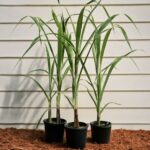
The size of eggplant seedlings is a guide to their development. Look for a stocky plant with healthy green leaves and a well-developed root system. Utah State University Extension suggests five to seven mature leaves as one guide. Seedlings usually need eight to ten weeks to reach transplant size, depending on growing conditions. Compact eggplant transplants still need time to adjust to the outdoors.
Over a week or two, harden it off. Begin with a couple of hours in a sheltered place, then gradually increase its exposure to sunlight and wind. Bring plants inside when nights fall below 55°F. Keep the potting mix from drying out completely. This transition prepares the leaves and stems for outdoor conditions; it does not make the plant cold hardy.
Wait until frost danger has passed and nighttime lows are consistently above 50°F before planting, as University of Minnesota Extension recommends. Soil near 70°F favors growth. Use a soil thermometer and watch the forecast, especially in a garden where a sunny afternoon can be followed by a cold night.
Give Roots Room and Leaves Sun
Choose a sunny place with fertile, well-drained soil. Compost can improve the bed, while a soil test helps determine whether nutrients are needed. Excess nitrogen encourages leafy growth at the expense of flowers and fruit. In a small garden, observe where buildings and trees cast shadows as the season advances; a warm, open bed gives the plants more light to fuel growth.
For eggplant spacing, Utah State recommends 24 inches between plants and 24 inches between rows. Check the cultivar’s label too: a spreading variety may need more room for its mature canopy, while a compact one may fit a smaller space. Space between plants makes it easier to reach fruit and inspect leaves. Allow a path so watering and harvesting do not require stepping on the bed and compacting the soil.
Water the transplants before planting. On a calm, cloudy day or in late afternoon, set each root ball at the same soil level it had in its pot, firm soil around it, and water thoroughly. Install a stake or support at planting time, before roots spread. As the plant grows, tie stems loosely so they have room to thicken and heavy fruit does not pull branches down.
From Flowers to Fruit
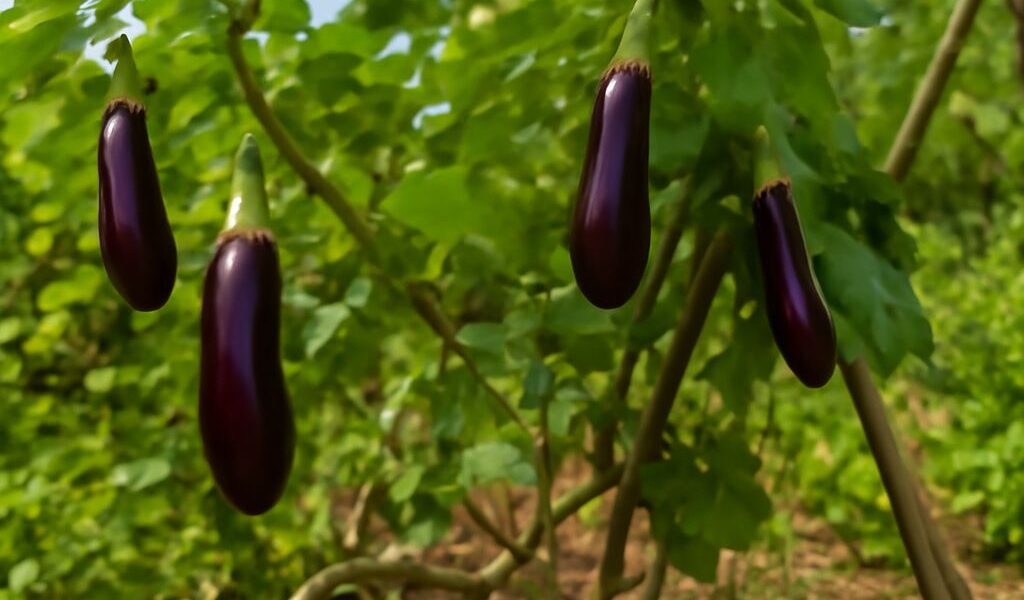
How do eggplants grow once established? Roots take up water and nutrients, while leaves use sunlight to build the plant’s tissues. Buds open into flowers, and fertilized flowers develop into fruit. The fruit’s shape and eventual size depend on the cultivar: some are long and slender, others rounded or oval.
How does eggplant grow when the weather turns difficult? Cold nights, extreme heat, or drought can interfere with flowering and fruit set. Minnesota Extension notes that temperatures above 90°F and night temperatures below 60°F or above 70°F can contribute to poor flowering. A temporary spell of dropped flowers may ease when conditions improve. Keep the soil evenly moist and leave healthy foliage in place to shade developing fruit from sunburn.
Water deeply and regularly, adjusting for rain, soil, and heat. Utah State Extension suggests roughly 1–2 inches of water a week. Check the soil beneath the surface; sandy soil and hot weather can dry a bed faster, while poorly drained soil stays wet longer. Once soil is warm, organic mulch helps conserve moisture and suppress weeds. Avoid piling it against the stem.
Pick fruit at the size expected for its variety, while the skin is glossy and the flesh firm. Clip the stem with sharp shears rather than pulling, and watch for prickles around the stem and leaves. Fruit left too long becomes dull and seedy. Regular harvesting also leaves the plant free to continue flowering and setting fruit.
A Weather-Aware Garden Checklist
- Before transplanting, look for a sturdy, rooted plant; finish hardening it off and wait for frost-free weather, consistently warm nights, and warm soil.
- After planting, check soil moisture beneath the surface and secure growing stems loosely to their supports.
- At flowering, watch the forecast and water consistently, especially during hot or dry spells. Notice whether new fruit appears as temperatures moderate.
- At harvest, compare fruit with the cultivar’s expected size and pick while glossy. As autumn nights cool, gather mature fruit and protect plants when low temperatures threaten.