 Gloria Davis
The corpse flower, known scientifically as Amorphophallus titanum, is famous for its impressive size and its distinct odor, which resembles that of rotting meat. This unique bloom attracts attention not only for its smell but also for its rarity. As we explore the fascinating world of corpse flowers, we’ll delve into their intriguing bloom cycle and discover where you can witness this extraordinary event.
What is a Corpse Flower?
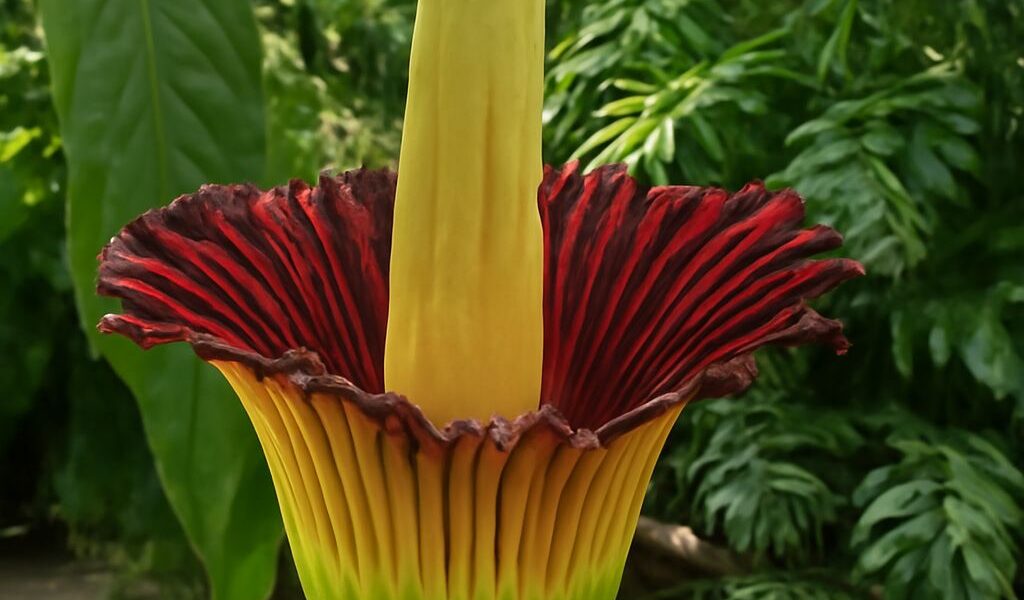
Corpse flowers are native to the rainforests of Sumatra, Indonesia. These remarkable plants are among the largest flowering structures in the world, with some blooms reaching over 10 feet in height. The bloom consists of a spadix surrounded by a spathe, which resembles a large petal. The flower is known for its infrequent blooming cycle, which can take several years to occur.
The Bloom Cycle of a Corpse Flower
The bloom cycle of a corpse flower is a captivating process. It can take anywhere from 7 to 10 years for the plant to gather enough energy to bloom. Once it begins, the actual blooming process is rapid, lasting only 24 to 48 hours. During this time, the spadix heats up, helping to disperse its notorious scent. After blooming, the flower collapses, and the plant returns to a vegetative state, starting the cycle anew.
Why Does the Corpse Flower Smell Like Rotting Meat?
The notorious scent of the corpse flower is a strategic adaptation. The rotting meat odor is designed to attract pollinators such as carrion beetles and flesh flies. These insects are lured in by the smell, thinking they’ve found a food source, and in the process, they help pollinate the flower. This remarkable evolutionary tactic ensures the survival and reproduction of the species.
Where to See a Corpse Flower Bloom
Witnessing a corpse flower bloom is a rare and exciting event. Many botanical gardens around the world cultivate these plants, providing enthusiasts with the opportunity to see them up close. Notable locations include the United States Botanic Garden in Washington, D.C., and the Royal Botanic Gardens, Kew in London. Keep an eye on their schedules and announcements, as these blooms are often highly anticipated and attract large crowds.