 Gloria Davis
The phoenix palm, more specifically known as the Canary date palm or Phoenix canariensis, is a striking and robust palm tree prized for its ornamental grandeur. We often see these majestic palms gracing parks, streets, and gardens in warm climates around the globe. With their massive, feather-like fronds and thick, textured trunks, they offer a bold tropical statement and are one of the most recognizable large palms. In this guide, we’ll walk through what makes the Canary palm tree unique, how to identify one, growing and care tips, and what sets it apart from similar palm species.
What Is the Phoenix Palm?
The phoenix palm refers to trees in the genus Phoenix, but when we talk about the Phoenix canariensis, we’re focusing on the highly distinctive Canary date palm. Native to the Canary Islands, this palm tree has become popular in landscaping for its dramatic appearance and tolerance of urban conditions. It’s commonly called the Canary palm tree or simply Canary date palm.
These palms are slow-growing but can reach heights of 15 to 20 meters (50 to 65 feet) at maturity, with a stout, solitary trunk that is often patterned with the bases of old leaf stems. Their enormous, arching fronds can stretch up to six meters (20 feet) long, forming a dense, symmetrical crown. Unlike the edible date palm (Phoenix dactylifera), the fruit of the Canary date palm is small, orange, and not considered palatable.
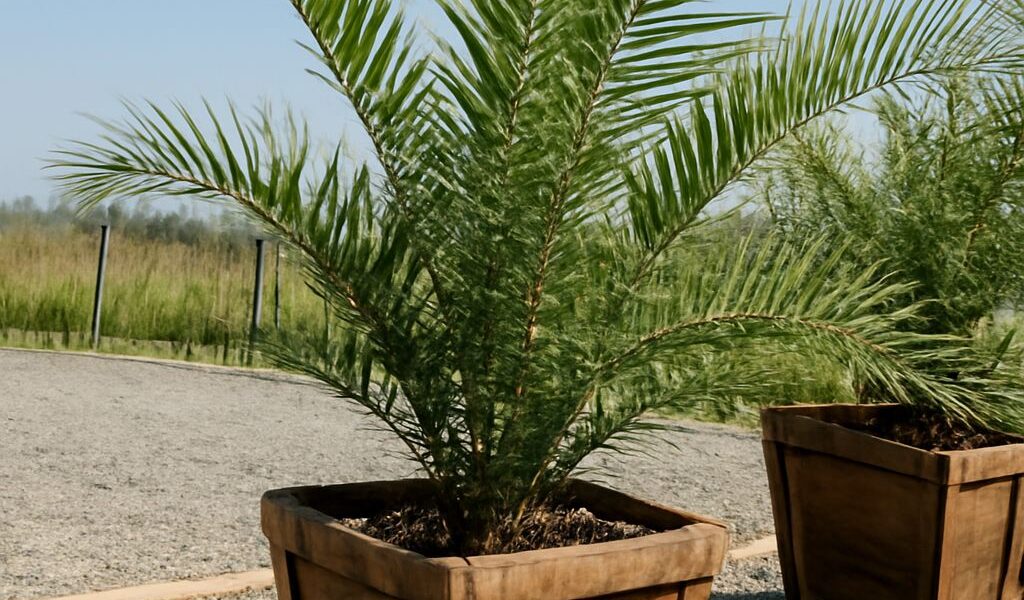
Because of their size and structure, Canary date palms are best suited for large open spaces, but we can also cultivate young specimens in containers for many years with proper care.
How to Identify the Canary Date Palm
We can reliably identify the Canary date palm by several distinctive features. First, the trunk is thick and columnar, reaching up to one meter (about three feet) in diameter at the base. The trunk’s surface is rough and patterned, showing diamond-shaped leaf scars from fallen fronds. This gives mature trees a textured, armored look.
The crown is made up of 50 to 100 large, arching fronds. Each frond is long, feather-shaped, and composed of hundreds of stiff, narrow leaflets that emerge at a sharp angle from the central stem. The leaf base often forms a prominent “skirt” around the trunk, especially in younger or less-maintained specimens.
During spring and early summer, mature palms produce large, branched flower clusters that emerge from among the fronds. While the small orange fruits that follow are not edible, they add seasonal interest. If we compare it to other palms, the sheer mass of the trunk and the wide, spreading crown help the Canary date palm stand out in any landscape.
Growing and Caring for Phoenix canariensis
For optimal growth, the Phoenix canariensis thrives in full sun and well-draining soil. We should select a planting site with plenty of space for the palm’s mature size. While established trees tolerate occasional drought, regular watering during the first few years is essential for good root development. The soil should be allowed to dry out slightly between waterings, as overly wet conditions can lead to root rot.
Fertilize two to three times per year with a slow-release palm fertilizer that includes micronutrients like magnesium and manganese. These nutrients help prevent common deficiencies, such as yellowing leaves. We also recommend mulching around the base to conserve moisture and reduce weed competition, being careful not to pile mulch against the trunk.
Pruning is mostly aesthetic—remove only dead or damaged fronds, and never cut too close to the trunk, as this can invite pests and diseases. The Canary date palm is generally pest-resistant, but we should watch for scale insects and palm weevils, especially in stressed trees. In colder regions, protect young palms from frost with covers or by growing them in containers that can be moved indoors in winter. Mature palms survive brief cold snaps but do best in USDA zones 9-11.
Canary Palm Tree vs. Similar Species
The Canary palm tree is often confused with other members of the Phoenix genus, especially the true date palm (Phoenix dactylifera) and the pygmy date palm (Phoenix roebelenii). The true date palm has a slimmer trunk and produces edible fruit, while the pygmy date palm is much smaller, rarely exceeding three meters (10 feet) in height, and is often used as an indoor or patio plant.
We can distinguish the Canary date palm by its massive trunk, robust leaf bases, and the sheer scale of its fronds. In contrast, the date palm’s trunk tends to be taller and more slender, and its crown is less dense. Other large landscape palms, such as the queen palm or the Washingtonia, have smoother, thinner trunks and more finely divided leaflets.
When selecting a palm for our garden or landscape, the Canary palm tree is best chosen for dramatic presence and architectural form, especially where ample space is available. Its durability, adaptability, and impressive size set it apart from other palms, making it a classic choice for both public and private landscapes.