 Gloria Davis
Heavenly bamboo, also known as Nandina domestica, is a versatile and attractive shrub admired for its lush foliage, year-round color, and easy care. Whether we’re aiming for a striking specimen plant or a lush living screen, nandina heavenly bamboo brings beauty and structure to gardens with minimal effort. Understanding its growth habits, care requirements, and landscaping uses helps us make the most of this adaptable plant.
What Is Heavenly Bamboo?
Despite its common name, heavenly bamboo is not a true bamboo—it belongs to the Berberidaceae family, not the grass family. The name comes from its tall, slender canes and delicate foliage reminiscent of bamboo. Native to East Asia, domestica nandina is cherished for its ornamental qualities: elegant, lacy leaves that shift from bright green to shades of red, orange, and bronze with the seasons. In spring and summer, it produces clusters of tiny white flowers, followed by vibrant red berries in autumn and winter.
Nandina heavenly bamboo typically grows 4 to 8 feet tall and 2 to 4 feet wide, though some dwarf cultivars stay much smaller. Its upright habit and colorful foliage make it an outstanding shrub for mixed borders, foundation plantings, or as a low-maintenance focal point in the landscape.
One of the most appealing aspects of heavenly bamboo is its year-round interest. The foliage transitions with the seasons, and the berries provide winter color and wildlife interest. However, it’s important to note that the bright red berries are toxic if ingested by pets, birds, or humans, so we should plant with care in family- or wildlife-friendly spaces.
How to Grow and Care for Nandina domestica
Heavenly bamboo thrives in USDA zones 6–9, adapting to a variety of garden situations. For best results, we should choose a location with full sun to partial shade. More sunlight encourages intense foliage color, while partial shade helps prevent leaf scorch in hot climates. Well-drained soil is essential; nandina tolerates a range of soil types but struggles with consistently soggy roots.
To plant, dig a hole twice as wide as the root ball and set the shrub at the same depth it was growing in the container. Backfill with soil, water thoroughly, and mulch to retain moisture and suppress weeds. Once established, nandina heavenly bamboo is drought-tolerant, needing only occasional deep watering during dry spells. In the first year, regular watering supports healthy root development.
Minimal pruning is required, but we can remove older stems at ground level in late winter or early spring to maintain a tidy shape and encourage new growth. Fertilize lightly with a balanced, slow-release fertilizer in early spring. Inspect for pests like aphids or scale, which are infrequent but manageable with horticultural oil if needed.
Because nandina heavenly bamboo is relatively pest- and disease-free, it’s an excellent choice for low-maintenance gardens. Still, we should be mindful that in some southern U.S. regions, it may spread aggressively if left unmanaged; removing berries before they drop can help control unwanted volunteers.
Using Heavenly Bamboo as a Hedge
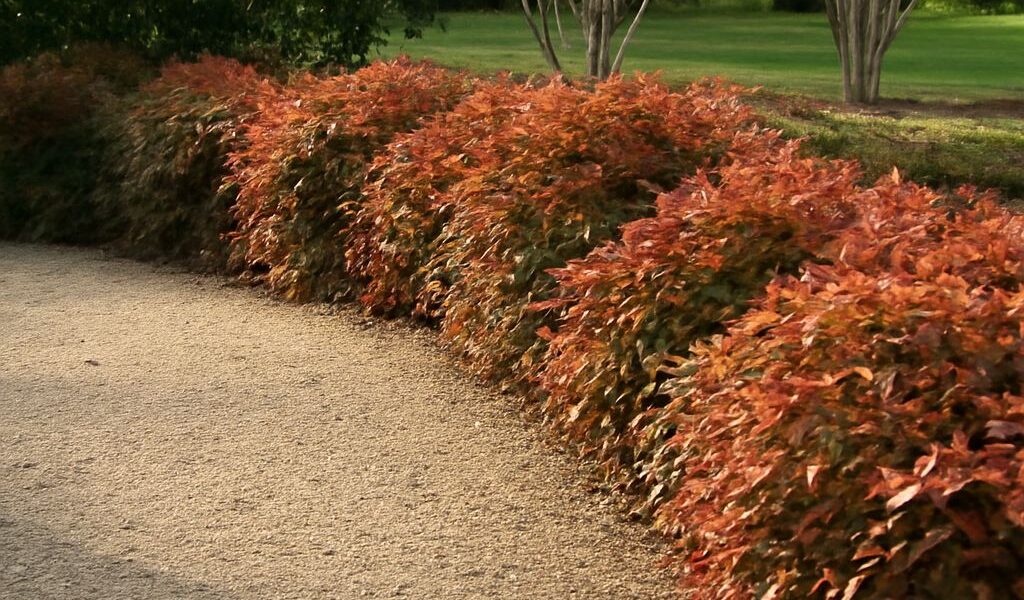
Creating a heavenly bamboo hedge is a stylish way to add privacy, structure, and color to our landscape. The upright, bushy growth of domestica nandina makes it an ideal candidate for informal hedges or screening. To establish a hedge, space shrubs 2 to 3 feet apart to allow for overlap and fullness as they mature.
For a dense hedge, choose taller cultivars such as ‘Gulf Stream’ or ‘Fire Power,’ which offer robust growth and brilliant seasonal foliage. Planting in a staggered double row increases privacy and visual interest. Regular pruning to thin out older canes will keep the hedge looking natural rather than sheared.
Heavenly bamboo hedges require less pruning than boxwoods or privets, and their multi-season display—lush green spring leaves, summer flowers, fiery autumn foliage, and winter berries—keeps the garden looking lively all year. Just be aware of the plant’s potential invasiveness and monitor for self-seeding in mild regions.
Common Uses and Varieties of Nandina Heavenly Bamboo
Beyond hedging, nandina heavenly bamboo shines in mixed borders, mass plantings, container gardens, and as an accent shrub near entries or patios. Its ability to provide color, texture, and structure makes it valuable for both formal and informal designs. We can use it to fill awkward corners, soften hardscapes, or create wildlife-friendly thickets (with care given to berry toxicity).
Popular varieties of domestica nandina include:
- ‘Fire Power’: A compact form topping out at 2 feet, showing vivid red fall and winter foliage.
- ‘Gulf Stream’: Dense, dwarf, and highly colorful, excellent for low hedges or borders.
- ‘Blush Pink’: Known for new pink growth and smaller size, perfect for containers or small gardens.
- ‘Harbor Dwarf’: A spreading, low-growing cultivar ideal for ground cover or foundation plantings.
By selecting the right variety and site, we can enjoy the beauty and versatility of nandina heavenly bamboo in almost any garden setting.