 Gloria Glover
 Tropical rainforest adaptations help plants manage intense rainfall, scarce light, and soils that lose nutrients quickly. Plants use drip-tip leaves, shallow or buttress roots, climbing stems, and fast growth to survive, while animals feed selectively on leaves, fruit, seeds, and flowers across the forest’s vertical layers.
These conditions create a close relationship between plant form and diet. A canopy herbivore can reach soft leaves and fruit, while a ground-dwelling species may rely on fallen seeds, herbs, or low-growing foliage.
Tropical Rainforest Adaptations: Rain, Light, Nutrient-Poor Soil, and Layers
Heavy rain can damage leaves and wash soluble nutrients from the soil. Many rainforest plants have pointed drip tips that shed water quickly, reducing the time leaves stay wet and limiting fungal growth. Waxy surfaces and flexible stems also help leaves tolerate frequent downpours.
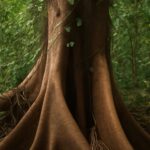
Light competition is strongest below the canopy. Tall trees, including kapok and Brazil nut trees, grow rapidly toward sunlight and support broad crowns high above the ground. Their buttress roots provide stability in shallow, heavily weathered soil. Understory plants grow more slowly and often have large, dark-green leaves that capture weak, filtered light efficiently.
Because nutrients are concentrated in living tissue and decomposing litter rather than deep soil, many roots remain near the surface. Fungi associated with roots can improve nutrient uptake, while rapid decomposition allows plants to reuse nutrients before rain carries them away. The result is a layered forest: emergent trees, a closed canopy, a dim understory, and a shaded forest floor.
Plants in the Jungle: Canopy, Understory, Epiphytes, Vines, and Ground Plants
Many plants in the jungle occupy a specific layer. Canopy trees such as kapok reach above neighboring crowns for direct sunlight; their leaves and flowers become food and shelter for animals high in the forest. Understory plants such as cacao and heliconias tolerate shade, often producing flowers or fruit close to their trunks where pollinators and dispersers can find them.
Epiphytes, including orchids, bromeliads, and some ferns, grow on branches rather than in soil. They collect rainwater and dust in leaf rosettes, absorb nutrients from trapped organic matter, or form partnerships with fungi. They do not usually parasitize their host tree.
Vines and woody lianas use trees as supports, allowing them to climb into brighter levels without building thick trunks. On the ground, gingers, palms, seedlings, and ferns spread broad leaves through low light. Some have flexible stems or underground storage organs that help them recover after trampling or damage.
Rainforest Herbivores: Leaves, Fruit, Seeds, and Forest Layers
Rainforest herbivores occupy every level. Three-toed sloths feed mainly on canopy leaves, where their slow movement conserves energy from a low-quality diet. Spider monkeys and other canopy primates select fruit, young leaves, flowers, and seeds, moving between trees as seasonal foods mature.
In the understory, leafcutter ants harvest foliage to cultivate fungi rather than eat the leaves directly. Caterpillars and leaf beetles consume tender plant tissue, often specializing on particular species. Tapirs browse shrubs and herbs and also eat fallen fruit on the forest floor. Agoutis crack hard seeds, consume fruit, and sometimes bury seeds that later germinate.
How Plants and Herbivores Share Forest Resources
Plants limit feeding with tough leaves, thorns, latex, toxins, and bitter tannins. Herbivores respond by choosing young leaves, digesting fibrous tissue with specialized microbes, or focusing on nutrient-rich fruit and seeds. Feeding pressure can also shape where plants grow and when they produce leaves or fruit.
Animals then return nutrients through dung and move seeds away from parent trees. Some seeds pass through digestive tracts more successfully than others, linking herbivore movement with forest regeneration. This exchange connects canopy, understory, and ground communities into one functioning rainforest system.