 Gloria Glover
 The desert biome average temperature in hot deserts is roughly 20–25°C (68–77°F) annually, but this average hides sharp daily and seasonal swings. Clear, dry air and sparse vegetation allow strong daytime heating and rapid heat loss after sunset. Cold and high-elevation deserts can be much cooler, so deserts are not uniformly hot.
These extremes limit water availability and plant growth. A desert food pyramid therefore starts with scattered, drought-adapted producers and narrows toward predators. The biggest threat to biodiversity is habitat loss, which removes food, shelter, and movement routes while amplifying other pressures.
Desert biome average temperature: Hot deserts average 20–25°C annually, with sharp daily and seasonal extremes
An annual average combines all hours and seasons; it does not describe conditions at noon or midnight. In subtropical hot deserts, summer daytime temperatures commonly exceed 40°C (104°F), while clear nights can fall near or below 10°C (50°F), especially at higher elevations. Winter days may be mild, but nighttime freezes are possible. Coastal deserts are often cooler because of cold ocean currents and fog, while interior deserts usually experience stronger extremes. Rainfall is also episodic: a short storm can trigger brief plant growth without changing the long-term dry climate.
Building a desert food pyramid: From producers to apex predators
A trophic pyramid tracks energy transfer, so it represents a simplified food web rather than one fixed chain:
- Producers: Creosote bushes, prickly pear, saguaro, desert grasses, shrubs, and photosynthetic soil-crust organisms form the base.
- Primary consumers: Kangaroo rats, jackrabbits, desert tortoises, grasshoppers, and other herbivores eat plants, seeds, or nectar.
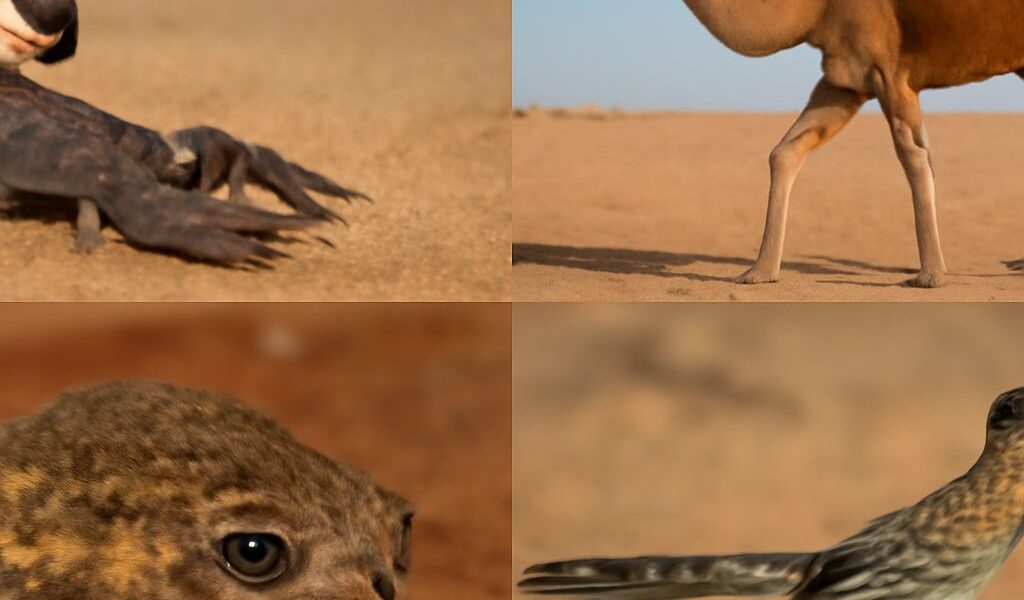
- Secondary consumers: Lizards, spiders, scorpions, insect-eating birds, and smaller snakes consume herbivores.
- Apex or top predators: Coyotes, kit foxes, hawks, owls, and larger snakes occupy the upper levels, depending on the desert ecosystem.
Fungi, bacteria, and detritivores decompose dead material at every level, returning nutrients to the soil. Omnivory also connects several levels, making real desert food webs more flexible than a simple pyramid.
Why energy narrows at higher trophic levels
Desert plants generally have low net primary productivity because water is limited, even when sunlight is abundant. After rain, producers may rapidly generate leaves, seeds, or flowers, but the productive period can be brief. Only a fraction of plant energy becomes new herbivore tissue, and less reaches predators; roughly 10% is a useful rule of thumb, not a fixed law. As a result, deserts support fewer large predators, which often require broad territories and varied prey.
The biggest threat to biodiversity: Habitat loss, fragmentation, and compounding pressures
Habitat loss is a leading direct threat because it removes or degrades places where organisms feed, breed, shelter, and find water. Irrigated agriculture, urban growth, roads, mining, energy infrastructure, and intensive recreation can erase plant patches and biological soil crusts. Fragmentation divides remaining habitat, blocks movement, increases road mortality, and isolates small populations. A species may remain present on a map while losing enough connected habitat to survive.
Other pressures intensify this damage. Groundwater pumping reduces oases and riparian refuges; overgrazing strips vegetation and destabilizes soil; invasive grasses can increase fire frequency; and climate change can intensify heat, shift rainfall, and slow recovery after disturbance. Pollution, illegal collection, and overharvesting add local stress, especially when fragmented populations cannot easily recolonize damaged areas.