 Gloria Glover
Which plants called andromeda belong in a sheltered garden border? Many are evergreen shrubs in the genus Pieris, including Japanese pieris. These andromeda shrubs have hanging clusters of small, urn-shaped flowers and need acidic, moist, well-drained soil. A name on its own, however, can also refer to a different genus, so the full botanical label matters.
The distinction shapes the advice that follows. A shrub suited to the edge of a woodland may struggle in a permanently wet bog, while a bog plant can dry out in an ordinary border. Identify the species first, then match the planting place to its roots and climate.
Andromeda shrub: read the botanical label
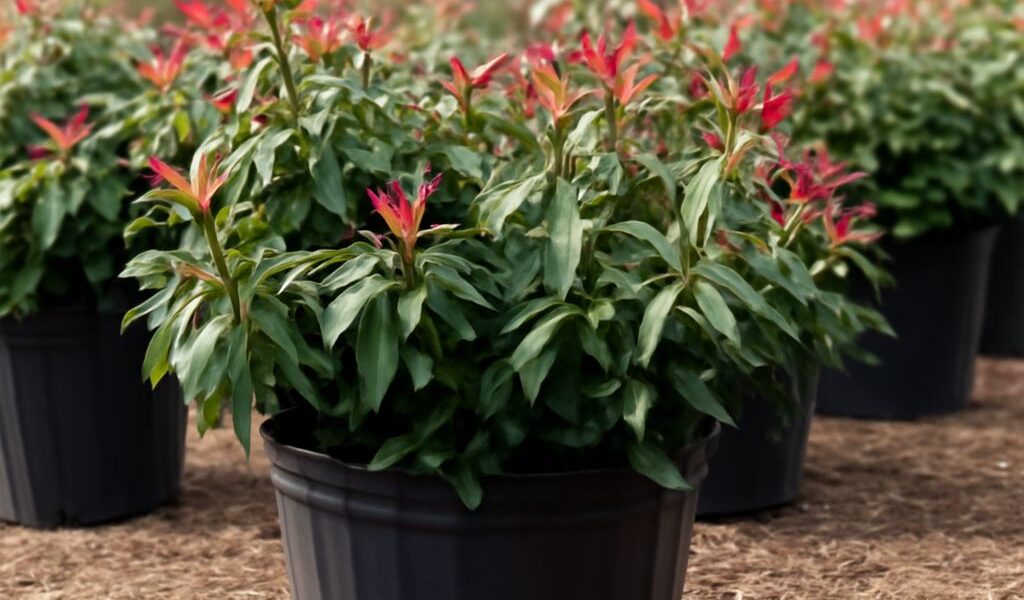
An andromeda plant at a nursery may be Pieris japonica, also called Japanese pieris. It is a slow-growing evergreen native to parts of East Asia, with leaves gathered near the branch tips. New growth may emerge coppery red, and white, sometimes pink, flowers hang in chains in spring. The species can reach 8 to 10 feet tall and 6 to 8 feet wide; dwarf cultivars stay smaller. North Carolina State University Extension describes its identification and growing conditions.
The nursery wording “Pieris andromeda” combines a genus with a common name; it is not enough to identify a species or cultivar. Look for an italicized two-part botanical name and, if present, a cultivar name in single quotation marks. For an andromeda shrub, a full label lets you check the mature dimensions and hardiness of the actual plant before choosing its home.
Mountain andromeda, Pieris floribunda, belongs to the same genus but is a different species. Native to the southeastern United States, it is usually smaller, with more upright flower clusters. NC State describes it as cold hardy but sensitive to high heat and humidity. For a local planting, compare the needs of the named species with your conditions rather than transferring a single size or hardiness rating to every member of the genus.
A similar name, a different habitat
Andromeda polifolia, commonly called bog rosemary, belongs to the separate genus Andromeda. It is a low evergreen with narrow blue-green leaves and nodding pink or white flowers. In nature it grows in bogs and tolerates wet soil. NC State’s profile places it in zones 2 through 6 and notes its dislike of heat and humidity. Despite its common name, it is poisonous and is not culinary rosemary.
Plants sold as andromeda may belong to either genus. Both genera are in the heath family and favor acidic conditions, but their water needs differ. An andromeda bush identified as Japanese pieris needs drainage as well as moisture; bog rosemary tolerates much wetter ground. A photograph of bell-shaped blooms can suggest a family resemblance, but it cannot replace the name on a reliable tag.
Light, climate, and soil for Japanese pieris
For an established identification of P. japonica, choose sun to partial shade, with some shade in southern gardens and protection from winter winds. NC State lists the species for USDA zones 4b through 8b. A zone gives a broad guide to winter cold; summer heat, wind, and the cultivar’s own limits also matter. Check the label’s zone rating and mature spread before you buy.
These andromeda garden plants need acidic soil rich in organic matter, with consistent moisture and good drainage. The University of Maryland Extension recommends a pH of 4.5 to 5.5 for pieris and other acid-loving evergreens. Test the soil before adding amendments. If the site is persistently alkaline or stays waterlogged after rain, choose a more suitable location rather than trying to correct the planting hole alone.
Leave enough space around the mature canopy for air movement and access. A position sheltered by taller plants can soften harsh afternoon sun and wind, while still allowing the shrub to receive light. Avoid a low spot that collects runoff or a place directly beneath a downspout.
Planting and seasonal care
Dig a hole wider than the root ball and no deeper than its height. Set the root ball at the level it grew in the container, backfill with the excavated soil, and water thoroughly. Spread a modest layer of organic mulch over the root area, keeping it away from the stems. Mulch moderates moisture loss, while the open space around the stem helps prevent prolonged dampness against the bark.
During the first growing season, feel the soil beneath the mulch regularly and water deeply when it begins to dry. Once established, water during extended dry spells; do not leave the roots sitting in saturated ground. Fertilize only if a soil test recommends it, following its instructions. Too much fertilizer can damage shallow roots.
Inspect leaves for pale stippling and look beneath them for lace bugs. University of Maryland Extension notes that stressed plants in full sun suffer the most damage. Remove dead wood when needed; if shaping is necessary, prune just after flowering because next year’s blossoms form on older growth.
Japanese pieris is poisonous to people and animals: its leaves and nectar contain toxins. Place it where children and pets cannot chew it, and seek prompt medical or veterinary advice after suspected ingestion. As seasons pass, the evergreen foliage and developing buds give the border a quiet winter structure; in spring, fresh chains of flowers mark the return of growth.