 Gloria Glover
 Understanding the advantages and disadvantages of hydropower starts with one basic conversion: moving water becomes mechanical motion, then electricity. In a reservoir, water stored behind a dam supplies pressure; in a river, natural flow can provide the driving force.
Hydropower is renewable because the water cycle replenishes its fuel, but each project changes a river and may affect land, wildlife, and communities. We can evaluate it fairly by following energy through the plant before weighing hydropower advantages and disadvantages.
How Does Hydroelectric Power Work?
The sequence is straightforward. In a conventional plant, rain and runoff collect in a reservoir at a higher elevation. When operators open an intake gate, gravity sends water through a large pipe called a penstock. The pressure and flow push the blades of a turbine. High-head sites often use impulse turbines, while lower-head, high-flow sites may use reaction turbines.
The turbine turns a shaft connected to a generator. Inside the generator, rotating magnets or an electromagnet move relative to coils, inducing an electric current. A transformer raises the voltage for efficient transmission, and switchgear sends electricity to the grid.
After passing through the turbine, water returns to the river; it is not consumed, although its timing, temperature, sediment, and route may change. At the grid connection, protection equipment synchronizes the plant’s output with the wider electricity system. Operators can adjust output by controlling gates, so the plant can provide dispatchable electricity when water is available.
Advantages and Disadvantages of Hydropower
Hydropower’s strengths are clearest when a site has dependable water and suitable geography:
- Low operating emissions: Once built, a plant generates electricity without burning fuel. Its operational greenhouse-gas emissions and air pollution are generally low, although decomposing vegetation in some reservoirs can release methane.
- Reliability and flexibility: Reservoir plants can store water and respond quickly to changes in demand, supporting grid reliability alongside variable wind and solar. Drought can reduce this advantage.
- Efficiency and longevity: Hydropower can be highly efficient, and major facilities may operate for many decades when owners maintain dams, turbines, and generators.
- Additional services: Some reservoirs support water supply, irrigation, flood management, navigation, or recreation, although these services depend on local design and priorities.
Those benefits must be weighed against several significant costs:
- Ecological disruption: Dams interrupt fish migration, change natural flow patterns, trap sediment, and alter water temperature and downstream habitat. Fish passages and environmental flows can reduce, but not eliminate, these effects.
- Community impacts: Reservoirs can flood forests, farms, homes, and culturally important places. Large projects may displace communities, affect Indigenous rights, and create losses that compensation does not fully repair.
- High upfront costs: Construction can require long permitting periods, new transmission lines, major financing, and continuing safety and maintenance work. Cost overruns are a practical concern.
- Dependence on water conditions: Output depends on rainfall, snowmelt, and reservoir rules. Sedimentation can reduce storage, while drought and changing precipitation patterns may lower generation when demand is high.
Compared with fossil-fuel plants, hydropower avoids ongoing fuel purchases and can deliver electricity for decades. However, those long-term operating benefits do not remove the financial, environmental, and social costs of building a dam.
How Does Hydroelectric Energy Work in Different Designs?
Design changes the balance between benefits and costs, so hydropower is not one uniform technology:
- Reservoir hydropower uses a dam and stored water. It offers the greatest control over timing and can provide substantial firm capacity, but it generally has the largest land, habitat, sediment, and community footprint. Releases can be scheduled over hours, seasons, or longer periods, depending on storage and water rules.
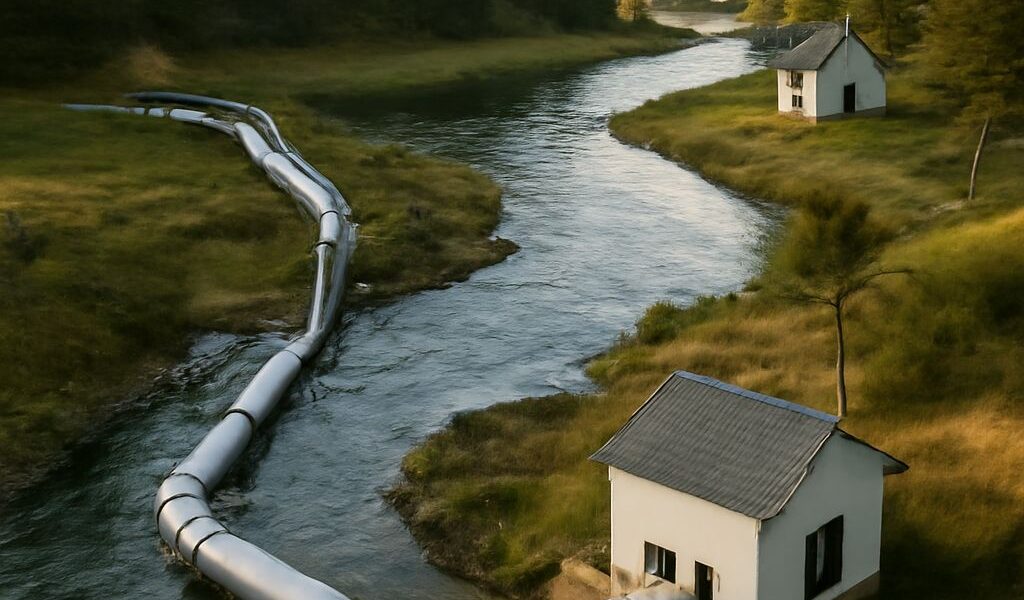
- Run-of-river hydropower uses a river’s ongoing flow with limited storage. It usually floods less land and alters fewer areas than a large reservoir, but its output follows seasonal flow and is less controllable during dry periods.
- Pumped-storage hydropower moves water uphill when electricity is available and releases it through turbines during high demand. It is an energy-storage system, not an independent primary energy source: pumping consumes electricity, and round-trip losses occur.