 Gloria Glover
 Host plants for butterflies do two jobs at different life stages. Milkweed is a caterpillar host: its leaves feed larvae, including monarch caterpillars. Purple coneflower and other flowering plants are mainly adult nectar sources, supplying energy for flight and reproduction.
We choose plants by the butterfly species we want to support, then match each plant to our region, sun exposure, soil moisture, and available space.
What Host Plants for Butterflies Provide at Each Life Stage
A host plant is where a butterfly lays eggs and a caterpillar eats, grows, and often pupates. Many larvae depend on a narrow group of plants. Monarch and queen caterpillars, for example, require milkweed. Adult butterflies may visit milkweed flowers, but they also need nectar from many unrelated plants.
We should not label every butterfly-friendly flower a host. A nectar plant feeds adult butterflies, while a host plant supports the immature stage. This distinction matters when a garden attracts adult butterflies but produces no food for caterpillars.
Milkweed Varieties by Region, Moisture, Size, and Growth Habit
These milkweed varieties cover several common garden conditions. Check local native-plant references before choosing a species, especially near the edges of its natural range.
- Common milkweed (Asclepias syriaca) suits much of eastern and central North America. It grows 3 to 6 feet tall in full sun and medium, well-drained soil. Its spreading rhizomes form colonies, so give it room or contain the roots.
- Swamp milkweed (Asclepias incarnata) is a better choice for consistently moist soil, rain gardens, and pond edges in eastern and central regions. Upright, clump-forming plants usually reach 3 to 5 feet and spread less aggressively than common milkweed.
- Butterfly weed (Asclepias tuberosa) handles dry, well-drained soil and heat across much of the eastern and central United States. This clump-forming species stays relatively compact at about 1 to 3 feet, with vivid orange flowers.
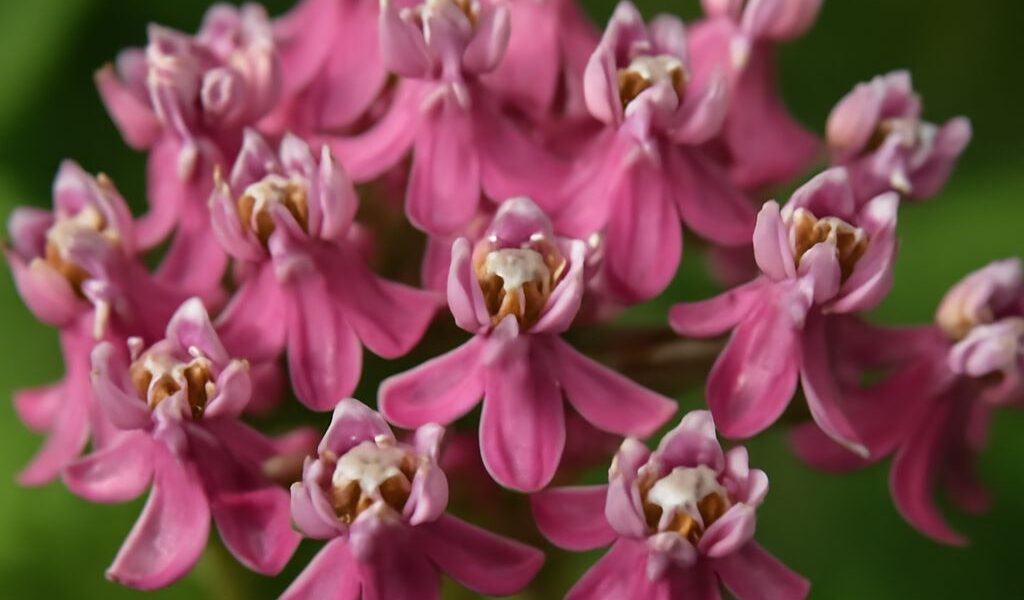
- Showy milkweed (Asclepias speciosa) fits many central and western gardens with medium moisture and good drainage. It reaches roughly 2 to 5 feet and can spread by rhizomes. Its large pink flower clusters are especially noticeable.
- Whorled milkweed (Asclepias verticillata) works in dry, lean soils and prairie-style plantings across a broad portion of North America. Fine leaves and slender stems create a smaller, airy plant, generally 1 to 3 feet tall.
Identifying the Purple Cone-Shaped Flower in a Pollinator Garden
If we are looking for a purple cone-shaped flower, purple coneflower (Echinacea purpurea) is the familiar choice. It has pink-purple rays that droop around a raised, bristly central cone, rough leaves, and sturdy stems about 2 to 4 feet tall.
Native mainly to eastern and central North America, it prefers full sun and well-drained soil with average moisture. Its broad flower heads provide abundant nectar for adult butterflies, bees, and other pollinators through summer. Purple coneflower is a nectar companion, not a substitute host plant for monarch or other milkweed-dependent caterpillars.
Combining Caterpillar Host Plants With Adult Nectar Sources
Start with at least one milkweed suited to the site. Use swamp milkweed in damp ground, butterfly weed in dry soil, or a spreading species such as common milkweed where a colony is acceptable. Plant several stems together to make them easier for egg-laying butterflies to find.
Then add nectar plants with different flower shapes and bloom times. Purple coneflower can share a sunny bed with asters, goldenrod, bee balm, blazing star, or native zinnias. Group nectar plants near, but not directly over, the milkweed so adults can feed while caterpillars retain their host-plant patch. This combination supports eggs, larvae, and adult butterflies without confusing the separate roles of each plant.