 Gloria Davis
How should you plant a cactus so it can thrive? First identify the plant and the climate it comes from, then choose a draining container, a suitable mix and a place with the right light. A desert cactus and a forest cactus share a family but live under different conditions.
Growing a cactus successfully also means adjusting water to its active and resting periods. The soil, the size of the pot and the temperature all affect how quickly the roots dry.
How to Grow a Cactus: Identify Its Home
Many familiar spiny cacti come from dry regions and need strong light and a mix that dries between thorough waterings. Holiday cacti, including Christmas and Thanksgiving types, are forest plants that grow on trees in their native habitat. They prefer bright indirect light and more regular moisture. University of Connecticut describes their preference for an organic, well-drained mix.
Read the plant label and retain its species or cultivar name. If the label is missing, compare the plant with reliable extension or botanical descriptions before placing it in intense sun. Flattened, jointed stems on a holiday cactus suggest different care from that of a spiny desert species, though appearance alone may not identify every plant.
For an outdoor planting, check the species’ cold tolerance as well as your winter lows, rainfall and drainage. Some cacti tolerate cold; many others require protection. In a wet or freezing climate, a container that can be moved to shelter may be more practical than an exposed bed. Avoid taking plants from the wild; choose nursery-grown specimens.
Choose a container and mix
A growing pot needs open drainage holes so excess water can escape. Select one only a little larger than the root ball; a large volume of wet mix around a small root system can dry slowly. If you use a decorative cover without holes, remove the inner pot to water and let it drain fully before replacing it. Empty any water left in the cover.
For many desert species, use a coarse, fast-draining cactus mix. For holiday cacti, choose an airy potting mix with organic matter that holds some moisture while allowing excess water to leave. Neither group benefits from standing water. Clay pots lose moisture through their walls faster than plastic, so take the material into account when checking the mix.
Before deciding how to plant a cactus, look at the roots and the size of the container. Reuse a clean pot with sound drainage if it still fits; move up slightly when roots have filled the available space. University of Florida Extension recommends keeping a repotted cactus at its previous depth.
Plant safely and protect the roots
Planting cacti begins with preparing the pot and mix before lifting the plant. Wear thick gloves, but remember that strong spines can pierce them. For a small spiny cactus, padded tongs or a folded strip of sturdy paper can help support it without squeezing. Handle prickly pears and chollas with particular care: their spines or segments may detach. Keep children and pets clear of the work area.
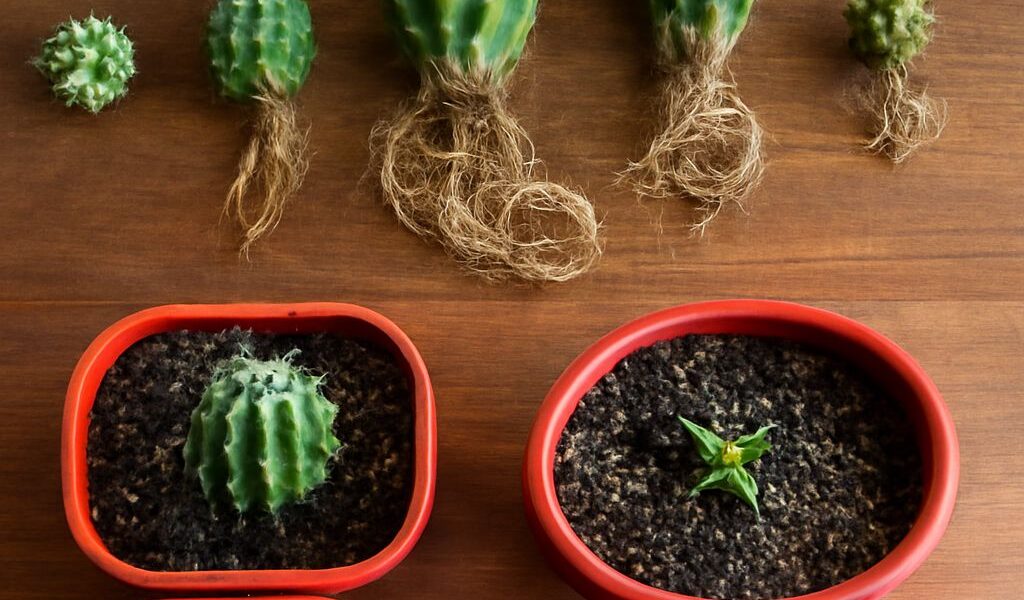
Tip the old pot gently and support the plant while easing out the root ball. Inspect roots and remove only clearly dead or damaged material with clean tools. When planting your cactus, set it at its former soil level, fill around the roots and settle the mix gently. For a desert cactus, wait a few days before the first watering so damaged roots can recover; forest species need care suited to their moisture requirements.
For a large or heavy specimen, do not attempt to lift it alone. Its weight can shift suddenly, and gloves cannot make its spines harmless. Seek experienced help and use appropriate lifting equipment. University of Arizona Extension offers handling guidance for larger desert cacti.
Light, water and signs to watch
How to grow cactus in a bright home depends on the species. Many desert types appreciate a sunny window, but move them into stronger direct light gradually to reduce sunburn. Pale, bleached or scorched patches after a sudden move are a reason to provide shade and reassess the exposure. Holiday cacti generally prefer bright, indirect light; an east-facing window can work well.
For many desert cacti, allow the mix to dry thoroughly before watering, then water until it runs from the drainage holes. Let the pot drain and empty the saucer. Check the mix deeper than the surface with a dry wooden stick or by lifting the pot. Cool temperatures and low light can slow drying substantially.
A holiday cactus should not remain dry for long periods. South Dakota State University Extension suggests watering when the upper third of its mix feels dry and the pot feels light. Water thoroughly and let excess escape. If stems become limp, examine the mix and roots: drought and persistently wet, damaged roots can both leave a plant struggling.
Follow the plant through the seasons
Knowing how to grow cacti means watching for new growth as light and temperature change. Many desert varieties need less water during a cool, slow-growing period than during active growth; the exact timing depends on species and indoor conditions. Holiday cactus growth and flowering follow their own seasonal rhythm.
Record when the mix dries and when new growth appears. As the plant begins growing, check moisture more often; as growth slows and the pot stays damp longer, lengthen the interval. Adjust the way you grow a cactus to the living plant and its surroundings, rather than keeping the same calendar all year.