 Gloria Davis
There is no single pruning date that suits every tree. A dormant shade tree, a spring-flowering ornamental and an oak in a disease-risk area each present a different question. Choosing the right season to cut trees begins with the species, the reason for the cut and the conditions outside—not with a date on a calendar alone.
Best Time of Year to Trim Trees: Start With the Purpose
For many deciduous landscape trees, late winter to early spring, before new growth begins, is a useful window for planned pruning. Without leaves, the branch structure is easier to see. Cuts made just before growth resumes are also exposed for a shorter period before the tree begins its seasonal response. University of Minnesota Extension recommends the late dormant season for most routine pruning.
When is the best time to trim trees if a branch is broken over a walkway? A serious hazard calls for prompt attention rather than a wait for winter. Keep people away from the area and arrange qualified help where the limb is large, hanging or difficult to reach. For a small, safely accessible dead twig, removal can often be done sooner, but species-specific disease guidance still matters.
The best time of year to trim trees also depends on what the cut is meant to achieve. Removing a hazardous branch, preserving a flower display and training a young tree are different jobs. Start by identifying the tree and its condition, then find a recommendation for that species in your region.
Dormancy, flowering and growth
Dormant-season pruning makes it easier to distinguish crossing limbs and assess the overall framework. For example, Minnesota Extension recommends pruning apple trees in late winter or early spring, after the coldest weather and before growth starts. Fruit-tree training is a specific task: the right cuts depend on the tree’s age and structure, not simply on the month.
A tree grown for spring flowers presents a tradeoff. Many spring bloomers form flower buds on existing wood before winter. Removing those branches during dormancy can remove the coming display, so light pruning soon after flowering may preserve the following year’s buds. Check the species before cutting; disease risk or a structural problem can alter the preferred schedule.
During the growing season, leaves make it easier to see which twigs are dead and which branches cast unwanted shade. But live foliage also makes food for the tree, so removing too much at once can add stress. Penn State Extension advises avoiding routine pruning from bud break until leaves have fully expanded and as trees enter dormancy. In drought or severe heat, defer optional cuts while the tree is already under strain.
Disease risk can change the calendar
In Minnesota, oak wilt offers a clear example of why local guidance matters. The fungus can be carried to fresh oak wounds by sap-feeding beetles. Minnesota Extension identifies April through July as a high-risk period in oak-wilt-prone counties and advises against wounding or pruning oaks then. Seasonal risk varies with weather and location; check local guidance before scheduling work.
If storm damage or a safety emergency makes an oak wound unavoidable during the risk period, Minnesota Extension advises covering the fresh wound immediately with latex-based paint or shellac. This is a disease-specific exception, not a general instruction to seal every pruning cut. Ask local Extension or an arborist how to handle the particular tree and any infected wood.
The same caution applies elsewhere: insect activity and disease windows differ by region and host. A date appropriate for an oak in one state should not be applied automatically to a fruit tree or an oak in another climate. Before deciding when to trim tree branches, identify the species and consult a local source that addresses its actual risks.
Small cuts and work best left to a professional
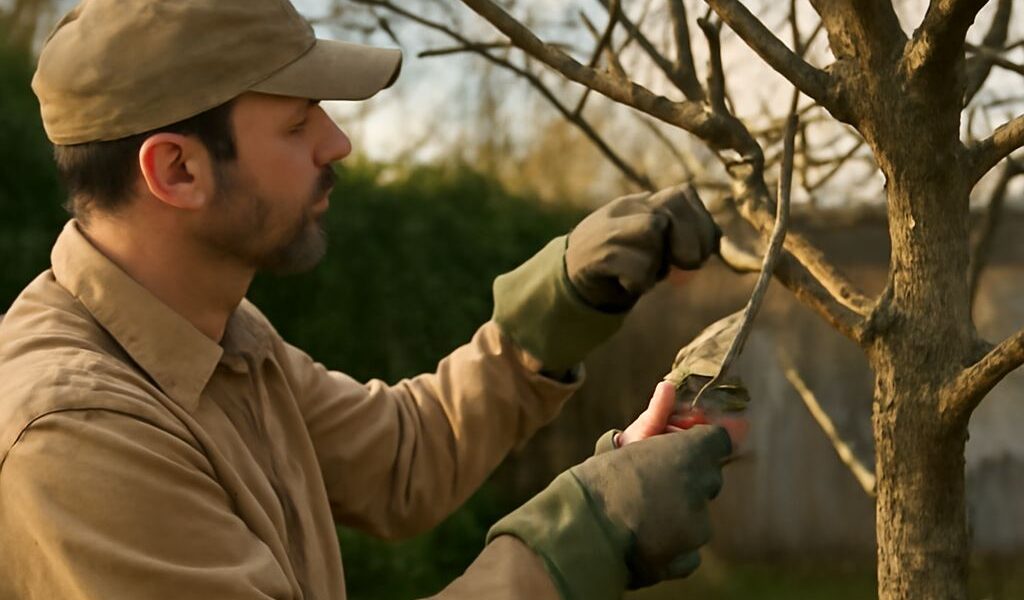
From the ground, a homeowner can often remove a small, reachable twig with clean, sharp hand tools. Make a purposeful cut just outside the branch collar—the slightly swollen area where the branch joins the larger stem—without cutting flush into the trunk or leaving a long stub. Clean tools between plants, especially when disease is suspected. Do not remove a large amount of live crown merely to make a tree look tidy.
A large limb can be heavy, under tension or positioned so that its fall is unpredictable. Work at height, structural pruning of mature trees and branches over buildings or roads require a qualified, insured tree-care professional with suitable equipment. Stay clear of overhead utility lines; contact the utility about vegetation near wires rather than attempting the work yourself. A dangling storm limb can fall without warning even when it appears caught securely.
Healthy trees also provide nesting and shelter. Before optional work, look for active nests and ask local wildlife authorities or a qualified professional about applicable protections. A routine appearance cut can wait while the use of a branch is assessed; a genuine safety hazard needs prompt professional attention.
Make the decision for this tree
Ask when to prune a tree only after you know its identity, your purpose and the local disease and weather conditions. Choose a suitable seasonal window for optional work, but arrange prompt help for serious damage. If the cut cannot be made safely from the ground or requires structural judgment, a qualified arborist is the right person to assess both timing and method.