 Gloria Davis
A single plump jade leaf can produce a tiny plant at its base, while a short piece of stem begins with an existing framework of leaves and branches. Both can grow into a new Crassula ovata under suitable conditions. To make more jade plants from a healthy parent, give each cutting time to dry, a porous medium and careful moisture while roots form.
Propagating Jade Plant Material: Leaf or Stem?
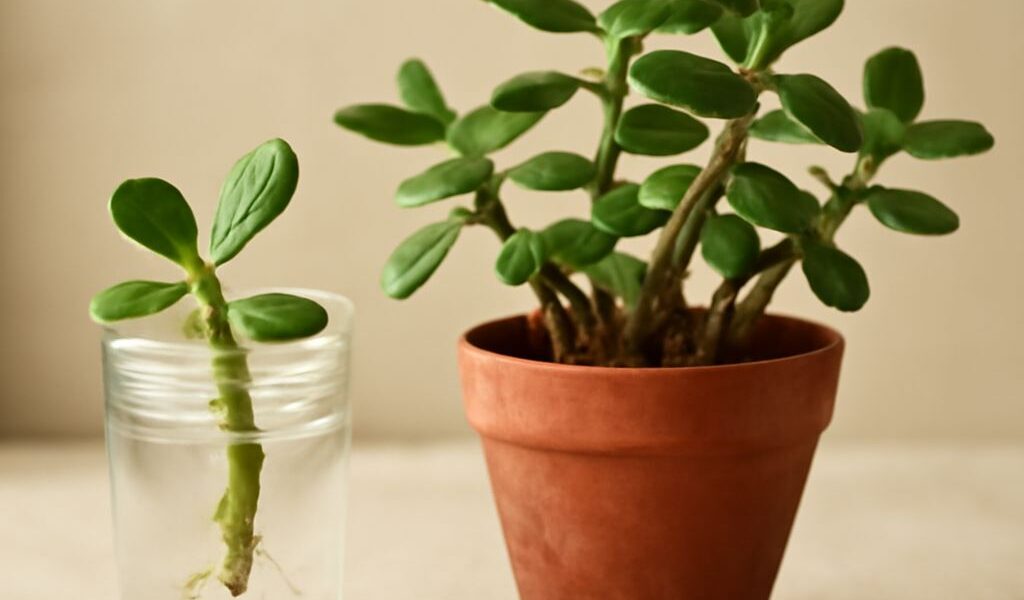
A stem cutting is a practical choice when you want a recognizable little plant from the start. It already has a stem and leaves, and new roots can form at the buried end. When propagating jade plant leaves, progress begins more slowly: first roots and then a small shoot develop near the base of the original leaf. The parent leaf may gradually shrivel as the new growth develops.
When learning how to propagate jade plant material, choose a healthy parent with firm leaves and no obvious pests or rot. Use a clean, sharp blade for stems and handle leaves gently. Iowa State University Extension lists jade as suitable for both leaf and stem cuttings; a damaged or weakened parent, however, is not a good source simply because it needs pruning.
Spring or the active growing season provides a useful opportunity because light and warmth generally support growth. Avoid taking material from a plant that has just been moved into strong sun, is severely dehydrated or is recovering from cold damage. Water the parent appropriately beforehand, then let it regain firm foliage before removing a cutting.
Prepare a stem cutting
To make a new jade from a stem, choose a healthy branch tip with several leaves. Cut below a node, the point where a leaf joins the stem, and remove leaves from the lower portion so that a short bare section can sit in the medium. Keep enough foliage above the surface to support the cutting. A modest piece is easier to stabilize than a long, heavy branch.
Set the cutting in a dry, shaded place with good air movement until the cut end has dried and formed a protective callus. The time varies with the thickness of the stem and room conditions; several days may be needed. Iowa State’s succulent propagation guide recommends allowing the cut end to dry before planting. A fresh wound pressed into wet soil is more vulnerable to decay.
Use a small pot with drainage holes and a fast-draining succulent mix. Make a hole, insert the dried lower stem and gently firm the mix around it. The cutting should stand without being buried deeply. A small support can prevent wobbling while delicate roots develop; do not tie the stem tightly.
Start a plant from a leaf
Choose a whole, firm leaf and detach it carefully at its base, where it joins the stem. Avoid tearing away just part of the leaf: the base is where new growth needs to form. Let the detached end dry, then lay the leaf on the surface of the porous mix or set its base just against the medium. Keep the rest of the leaf above the soil rather than burying it.
Jade plant cuttings made from leaves are small and easy to disturb. Keep the pot warm and in bright, indirect light, away from harsh midday sun. A leaf may remain unchanged for a while before producing roots or a tiny rosette. Do not repeatedly lift it to check: the first roots are easily damaged. Not every leaf succeeds, so preparing more than one healthy leaf can be useful without stripping the parent plant.
A leaf-derived plant begins as a small shoot and needs time to develop its own stem. A rooted stem cutting already has that structure. Neither method guarantees a particular rooting date; light, temperature, the cutting’s condition and moisture all influence progress.
Manage moisture while roots form
A cutting without roots cannot use water like an established plant, and wet, airless mix can encourage rot. Start with a lightly moistened, well-drained medium after the cut has dried. Check it rather than watering on a fixed schedule, and add a small amount of water when it has dried; do not keep the pot constantly soggy. University of Missouri Extension specifically advises keeping jade fairly dry during rooting.
Leave the pot uncovered in a bright location out of direct, intense sun. A sealed humid enclosure can keep succulent tissue wetter than intended. If a stem becomes soft and dark at its base, excess moisture or decay may be involved; remove the affected material rather than continuing to water it. A slightly wrinkled parent leaf can be part of the process, but mushy tissue is a different sign.
Move from rooting to ordinary care
New leaves on a stem cutting and a small plantlet forming at a leaf’s base are encouraging signs. A stem that offers gentle resistance to a very light touch may also have roots; avoid pulling hard. If a leaf is producing a shoot, leave it in place while the new plant develops and remove the old leaf only after it has dried or separates easily.
Once roots and new growth are established, gradually introduce brighter light. Water thoroughly enough for excess to drain, then let the mix dry before watering again, adjusting to the plant and season. This differs from the restrained moisture used while an unrooted cutting is establishing. Move to a slightly larger draining pot only when the young plant needs the room.
An established new jade shows firm growth of its own and roots that hold it in the mix. Whether it began as a leaf or a stem, those signs are more useful than counting days on a calendar.