 Gloria Davis
At dusk, the patterned leaves of a prayer plant rise from their daytime spread and incline toward one another. By morning, they open again. This quiet movement gives the plant its familiar name and helps explain why a plant with leaves like praying hands can be so absorbing to keep indoors.
Praying hands plant: A name shared by more than one kind
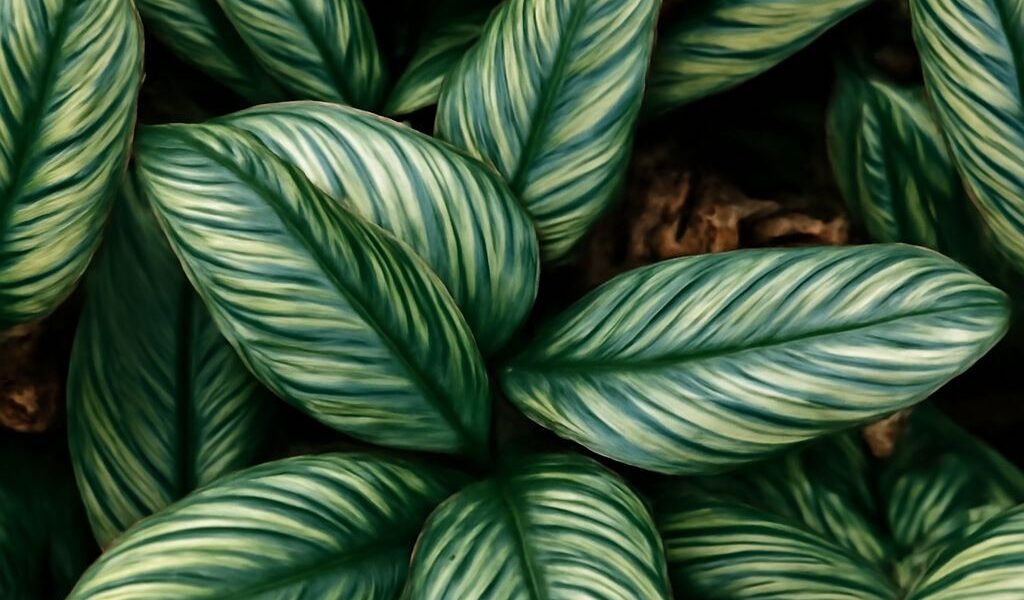
The familiar houseplant Maranta leuconeura grows low and spreads outward. Its oval leaves carry pale markings or dark patches; some varieties have striking red veins. New leaves emerge rolled, then unfurl to reveal their pattern. North Carolina State Extension describes the species and its characteristic evening posture.
The words praying hands plant describe an appearance, not a precise botanical identity. The Missouri Botanical Garden describes Maranta leaves closing upward in a gesture resembling hands. Other relatives show a similar movement: Stromanthe thalia belongs to the same family and folds its leaves at night, but it is a different species.
Garden centers also use the name prayer plants for members of the wider arrowroot family, Marantaceae. Plants called praying hands may therefore differ in shape and growth habit. The peacock plant, Goeppertia makoyana, for example, was formerly classified as Calathea makoyana and carries a different leaf pattern. Look for the scientific name on a label when possible; it is a better guide to the individual plant than a shared nickname.
Why the leaves rise
The daily change is a form of movement called nyctinasty. At a joint near the base of the leaf blade, changes in water pressure in cells alter the leaf’s position. Light and the daily cycle help coordinate this movement. The leaf has not grown into a new shape each evening: it can shift position again as conditions change.
Not every relative behaves identically. NC State notes that Goeppertia veitchiana, sometimes called medallion calathea, does not fold its leaves in the evening like some relatives. A still leaf at night is therefore a clue to observe alongside the plant’s identity and condition, rather than a diagnosis on its own.
Give the foliage filtered light
For a maranta indoors, choose bright, indirect light: a spot near a window where a sheer curtain softens strong sun can work well. Direct sun can bleach or scorch the leaves. In a dim corner, growth and color may weaken. If the pattern fades, first notice how much direct sun reaches the leaves and how long the room stays bright during the day; move the pot gradually and watch the newer growth.
Keep it away from cold drafts and heating vents. A consistently warm room is kinder to this tropical plant than a windowsill that becomes cold at night. The prayer plant’s patterned leaves can remain attractive for a long time when light and temperature are steady, though older leaves eventually age and can be removed.
Moist roots need air, too
Use a pot with drainage holes and a loose houseplant mix that retains some moisture while letting excess water escape. An organic-rich potting mix with perlite is a practical choice; the particles create air spaces around roots. Illinois Extension recommends regular potting mix and moist soil for maranta. Avoid leaving water on the crown, where stems can rot.
Check the mix with a finger rather than watering on a fixed calendar. During active growth, water when the surface begins to feel dry, before the entire pot dries out. Water thoroughly until excess drains, then empty the saucer. In winter, growth and water use often slow, so let the mix dry more between waterings while avoiding prolonged dryness. A pot that stays wet for days deserves a closer look at drainage and roots.
Leaf edges that turn brown can have several causes, including dry air or salts. Yellow leaves in persistently wet mix can point to root trouble. Feel the soil and inspect the roots before changing your routine: healthy roots should be firm, while rotting roots may be dark and mushy. Trim damaged roots and repot in fresh, well-draining mix if rot is present.
Humidity and an attentive routine
These plants favor humid air. Grouping houseplants or using a room humidifier can raise humidity around them; keep air circulating and avoid leaving foliage constantly wet. A pebble tray can help create a more humid space immediately around the pot, provided its base remains above the water. Brown tips already formed will not turn green again, so judge a change by the condition of new leaves.
To decide how to care for a prayer plant, bring these observations together: check light, the feel of the mix, drainage, and signs on both sides of the leaves. Fine webbing or tiny speckles can indicate spider mites; isolate an affected plant and inspect it closely. University of Minnesota Extension recommends regular inspection and isolation when pests are found.
Caring for this maranta becomes easier as you notice its own rhythm. Over successive seasons, its rate of growth and the speed with which the pot dries will show you when the routine needs to change.