 Gloria Davis
A moth orchid’s roots can turn silvery as their outer layer dries, then green again when wet. Inside a container, those roots need both moisture and air. Choosing the best pots for an orchid begins with the conditions surrounding them: the mix, the room and your watering routine.
The right orchid pot for your plant may be a clear plastic nursery pot tucked inside a heavier decorative cover. For another orchid, porous clay may suit a faster-drying mix and a more frequent watering schedule.
Best Pot for Orchids: Start With Drainage and Air
Many familiar houseplant orchids, including moth orchids, grow on trees in nature. Their roots cling to bark and receive rain and moving air rather than sitting in garden soil. Indoors, a coarse orchid mix creates spaces around the roots, while openings in the container let excess water escape.
Choose a growing pot with holes in the bottom. Side slots can admit additional air and speed drying, especially when the mix is moisture-retentive or the room is cool. A pot with only bottom holes can be a better fit for a dry room or a plant that needs more consistent moisture. The best pot for orchids therefore depends on how quickly the whole arrangement dries, not on the number of holes alone.
Water thoroughly, let excess water run out, and feel the mix below the surface before watering again. A dry top layer can conceal a damp center. Soft, mushy roots and persistently wet, broken-down mix are signs to inspect the plant and its drainage. Silver roots visible through a clear pot can help you judge moisture, although the middle of the mix still deserves a check.
Match the pot to the growing mix
Bark-based mixes leave large air spaces and generally dry faster than tightly packed sphagnum moss. Fresh coarse bark in a well-slotted pot may need attention sooner than moss in a container with fewer openings. The American Orchid Society describes adjusting both the mix and the container to balance air and moisture.
For a moth orchid in chunky bark on a warm windowsill, a plastic pot with bottom drainage can retain moisture long enough between waterings. In a cool room, the same pot filled with densely packed moss may remain wet for too long; a more open mix or additional ventilation can help. If your orchid needs even moisture, avoid combining a very airy pot, coarse bark and a dry, windy location unless you can water often enough.
Bark gradually breaks down into smaller particles, reducing the spaces for air. If the mix stays wet much longer than it used to or small fragments wash out during watering, examine it for replacement. Clemson Extension identifies those fragments as a sign that bark is breaking down.
Plastic, clay or a decorative cover?
Plastic is light, reusable and slower to lose moisture through its walls. Clear plastic lets you see some roots and the condition of the mix, making it easier to notice a wet pocket or deteriorating bark. Opaque plastic can work too; visibility is a monitoring aid, not a requirement for every plant. The best orchid pots offer openings suited to the mix as well as a shape that supports the plant. For orchids, the best pots balance that support with accessible drainage.
Unglazed clay is porous and usually dries faster. Its weight can steady a top-heavy plant, and it may suit a grower who waters frequently. In a dry home, however, roots and mix may dry too quickly. Roots can also attach to clay, so take care when repotting. Glazed ceramic generally loses less water through its walls, and some decorative pieces have no drainage hole at all.
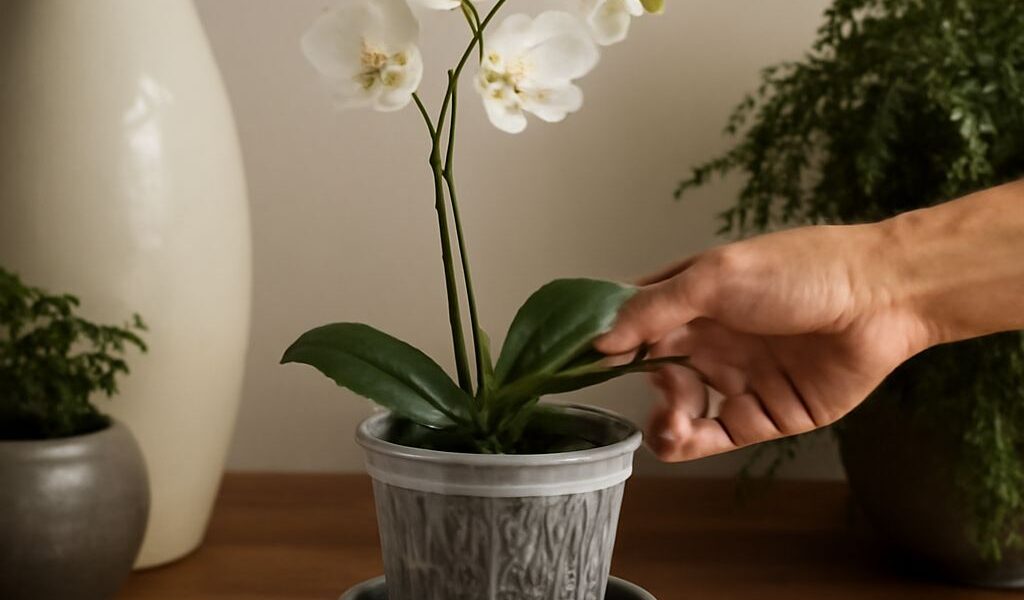
Treat those decorative orchid planters as covers: set the plant in a separate, perforated growing pot inside. Remove it to water and allow it to drain before returning it. Empty any water that collects in the cover, so the inner pot does not sit in a pool. Planters for orchids with removable inner pots make that routine easier. The American Orchid Society’s repotting guide describes this two-pot arrangement and recommends drainage holes for the growing container.
Size for roots, then provide stability
The best growing pot for an orchid fits its root mass. A larger container holds more mix, which can stay wet longer. When repotting, select a pot that accommodates the living root mass without leaving a great deal of empty space around it. A few aerial roots extending above the rim are normal and do not alone mean the plant needs a much larger home. Replace decomposed mix or move up a size when the plant has genuinely outgrown its container.
A tall flower spike can shift the balance of a light plastic pot. A heavy cover or a stable saucer can help; keep drainage openings clear and use a stake if the plant needs support. Reuse a sound container after cleaning it, rather than replacing it simply for appearance.
For a moth orchid in bark in an average indoor room, choose a snug, clear plastic pot with bottom holes and monitor its roots and mix. For a plant that needs faster drying and receives frequent attention, a snug unglazed clay pot may be the better choice. The best pots for orchids are the ones that let each plant’s roots dry and recover at the pace its growing conditions require.