 Gloria Davis
The manuka tree, known botanically as Leptospermum scoparium, is a resilient evergreen shrub or small tree native to New Zealand and southeastern Australia. Famous for its distinctive flowers and unique properties, the manuka tree is best recognized as the source of manuka honey—a prized natural product with worldwide acclaim. In this guide, we explore what sets the manuka tree apart, how to identify it, the conditions it thrives in, and its most important uses.
What Is the Manuka Tree?
The manuka tree (Leptospermum scoparium) is a member of the Myrtaceae family. While the species is most closely associated with New Zealand, it also occurs in parts of eastern and southeastern Australia. The tree naturally grows as a multi-stemmed shrub, typically reaching 2 to 5 meters in height, but occasionally developing into a small tree of up to 8 meters in optimal conditions.
We often see the manuka tree in wild landscapes, where it plays a key role in early forest regeneration. Its dense, quick-growing nature makes it a pioneer species that helps stabilize soils and create habitats for native wildlife. The tree’s aromatic foliage, attractive blossoms, and adaptability have also made it popular for ornamental use in gardens and landscaping.
One of the most distinguishing features of the manuka tree is its production of nectar that bees transform into manuka honey. This honey is valued for its unique flavor, antimicrobial properties, and health benefits, making the manuka tree an important economic and ecological resource.
Identifying Leptospermum scoparium
When identifying Leptospermum scoparium, we look for several key features. The manuka tree displays small, pointed, aromatic leaves that are typically 7–20 mm long and 2–6 mm wide. The leaves are arranged alternately along slender, reddish-brown branches, and when crushed, they release a sharp, tea-like scent.
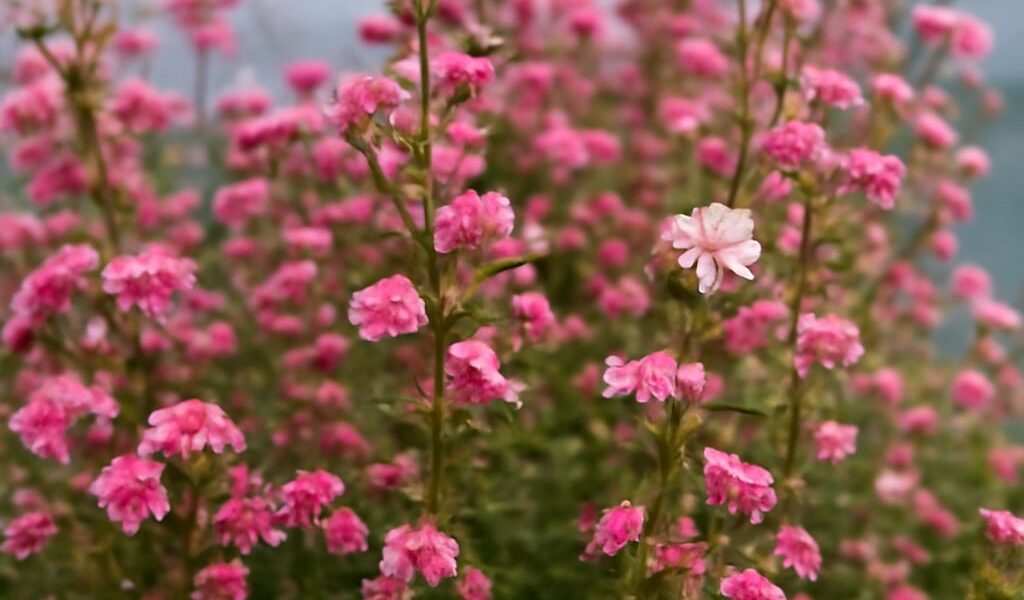
Manuka’s flowers are another standout characteristic. Blooming from spring through early summer, the tree produces single, five-petaled blossoms that range in color from white to pale pink. Each flower measures about 8–15 mm across and is often visited by bees, which are essential for manuka honey production. The flowers’ centers are filled with numerous stamens, giving them a delicate, feathery appearance.
After flowering, the tree develops small woody seed capsules that persist on the branches. These capsules split open over time, releasing tiny seeds that encourage the spread of the species, particularly after disturbances such as fire or land clearing. The presence of these capsules, along with the tree’s bark—which can be rough and peeling—further helps distinguish the manuka tree from similar native shrubs.
Natural Habitat and Growth Conditions
The manuka tree is highly adaptable and thrives across a range of environments. In the wild, we find it in coastal scrub, lowland forests, hilly terrain, and even on exposed ridges. It prefers free-draining soils and copes well with poor, acidic, or sandy conditions where few other shrubs can survive. While it tolerates drought once established, the manuka tree grows most vigorously with moderate, regular rainfall.
Sun exposure is important for optimal flowering and honey production. Manuka trees prefer full sun to partial shade, although dense stands can create their own microclimate as they mature. In gardens, we recommend planting manuka in open, sunny locations with good air circulation to minimize the risk of fungal diseases.
One of the reasons Leptospermum scoparium spreads rapidly in disturbed areas is its ability to germinate readily from seed. Following fire or land clearance, manuka is often among the first species to recolonize the site, helping to prevent erosion and pave the way for more complex ecosystems.
Popular Uses of the Manuka Tree
The most renowned use of the manuka tree is as the source of authentic manuka honey. Bees collect nectar from manuka blossoms and produce a honey with distinctive flavor and high methylglyoxal content—a compound responsible for manuka honey’s well-researched antibacterial properties. We find manuka honey widely used in natural health products, wound care, and as a gourmet food ingredient.
Beyond honey, the manuka tree has other traditional and modern uses. Indigenous Maori have long used various parts of the tree for medicinal purposes, including infusions of the leaves for treating fevers and respiratory issues. The wood, though hard and fine-grained, has been used for tool handles and smoking foods.
In landscaping, manuka is prized for its resilience, attractive form, and ability to attract pollinators. It is often planted in native gardens, as hedging, or to restore degraded land. The plant’s essential oils, derived from leaves and twigs, are sometimes used in aromatherapy and natural skincare formulations, further highlighting the versatility of this remarkable species.