 Gloria Davis
A common garden myth says that a flower planted in summer will bloom steadily until frost. In practice, heat, water, the length of the local growing season and the plant’s own flowering cycle all shape the display. Choosing flowers for a summer planting means working with those conditions: some annuals can fill a gap quickly, while perennials may need time to establish before their best show.
Begin with your season, not the calendar
Summer plants must fit the place where they grow. A June planting in a cool northern garden faces a different stretch of weather from one in a hot southern yard. Find your usual first fall frost date and count the weeks remaining; then check the seed packet or plant label for the expected time to bloom. In a short season, an established transplant may give you more time to enjoy flowers than seed sown late.
Look at the site over a full day. A bed in sun from morning to evening dries differently from a container shaded after lunch. Note whether the soil drains quickly or stays wet after rain, and measure the space available at mature size. A plant labeled heat-tolerant still needs water while its roots establish, and a crowded bed can be harder to water and keep healthy.
When you compare summer flowers to plant, consider their future as well as their first color. Annuals generally complete their life cycle in one growing season; perennials can return for several years where they are hardy, though a summer transplant may concentrate first on roots. Check local guidance on planting during extreme heat: waiting for a cooler spell can reduce stress.
Summer Flowers to Plant for Sun and Seasonal Color
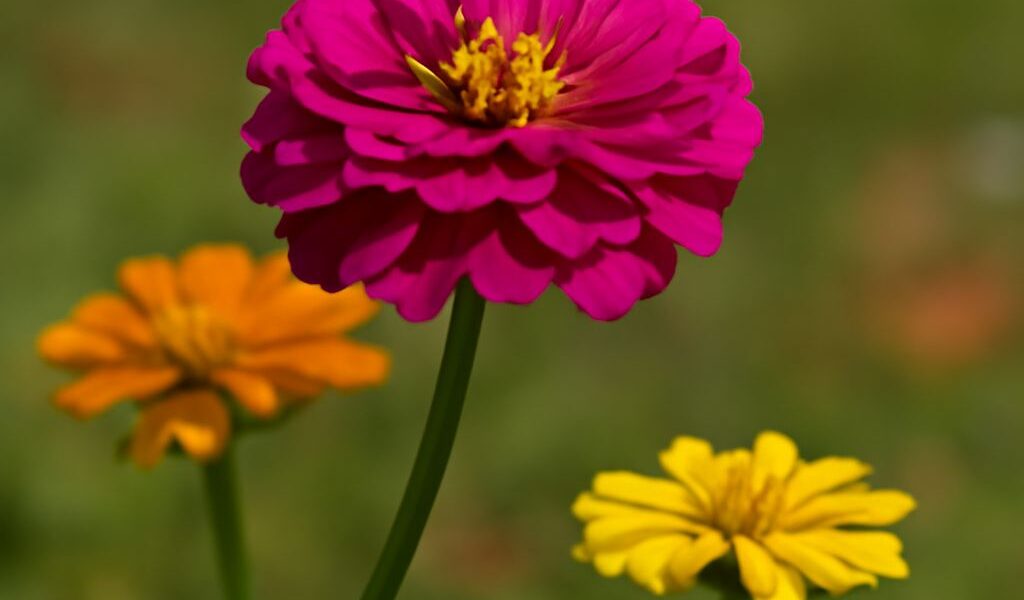
Common zinnia (Zinnia elegans) is an annual for a sunny, well-drained bed. It grows from seed sown after frost and flowers in summer and fall, though intense heat can slow the display. Sizes vary widely: compact cultivars suit containers, while some taller types reach about 4 feet. Leave the spacing recommended on the packet for air circulation, and water the soil rather than routinely soaking the foliage. NC State Extension notes its need for full sun and good drainage.
Lanceleaf coreopsis (Coreopsis lanceolata) is a perennial with yellow flowers in late spring and early summer. It typically reaches about 2 feet and prefers full sun and well-drained soil; established plants tolerate heat and dry conditions. It can self-seed readily, so leave room for spread or remove some spent heads. NC State’s profile notes that its native range is regional: check whether it belongs in your local landscape before planting.
Purple coneflower (Echinacea purpurea) is another perennial option for suitable parts of central and eastern North America. Its pink-purple flowers can appear from early summer into fall. Plants may reach 3 to 4 feet, prefer well-drained soil and accept full sun to partial shade. Once established they tolerate drought, but new plants need attention during dry spells. NC State Extension also recommends leaving some seed heads for birds.
The two perennials offer a useful contrast: coreopsis can begin the sequence earlier, while coneflower carries it later. Neither is a promise of flowers on every day, and a plant installed during a hot summer may flower less while it settles in. Buy the size and cultivar that fit your space, and check local hardiness and native range rather than assuming a species suits every US garden.
Build a sequence rather than a single peak
A long display comes from overlapping flowering periods. In a suitable sunny bed, coreopsis can provide early color, coneflower can follow, and zinnias can add summer and fall flowers if planted with enough warm time remaining. Write the expected bloom windows on a simple calendar, then adjust it after observing your own garden. Weather and local conditions will move those windows.
Gardeners often seek plants that bloom all summer, but a label is only a starting point. Some annuals flower for a long period when conditions are favorable; even they can pause in severe heat or decline as days shorten. Mix species with different flowering times instead of relying on one plant to perform without interruption. Include locally appropriate flowers with accessible centers for pollinators, and avoid pesticide use where possible.
Help new roots through the heat
Plant in a cooler part of the day and water the root ball thoroughly after planting. Check the soil beneath the surface frequently during establishment, especially in containers, which can dry quickly. Water when the root zone needs it, allowing for the species and drainage; constantly saturated soil is not the same as consistent moisture. A layer of mulch helps slow evaporation, but keep it away from stems.
Remove some faded annual flowers when appropriate to encourage further bloom, while leaving selected perennial seed heads for wildlife. Inspect plants regularly for wilting, damaged leaves and crowded growth. A newly planted perennial may need attention to roots this year before becoming one of the garden’s reliable summer perennials in future seasons.
Choose flowering plants for the sunlight, moisture and mature space you actually have, then match their planting and bloom times to the weeks remaining in your local season. A well-timed sequence can make a modest bed welcoming long after its first flowers fade.