 Gloria Davis
Bean plants do not all grow as tidy little bushes. Pole varieties send out long, twining stems that climb toward the light, often reaching 6 feet or more. Learning to raise pole beans means planning for that upward growth before the first seed goes into the ground.
Cultivating climbing beans can make good use of a sunny garden bed, and the plants can produce over a long season. A stable support, warm soil, steady moisture, and regular picking are the foundations of a useful harvest.
Growing pole beans: choose a place and support
Select a site with full sun and well-drained soil. In a small garden, consider where the tall vines will cast shade: a trellis on the north side of a bed is less likely to shade shorter sun-loving crops during the day. Leave enough room to reach both sides for watering and harvest.
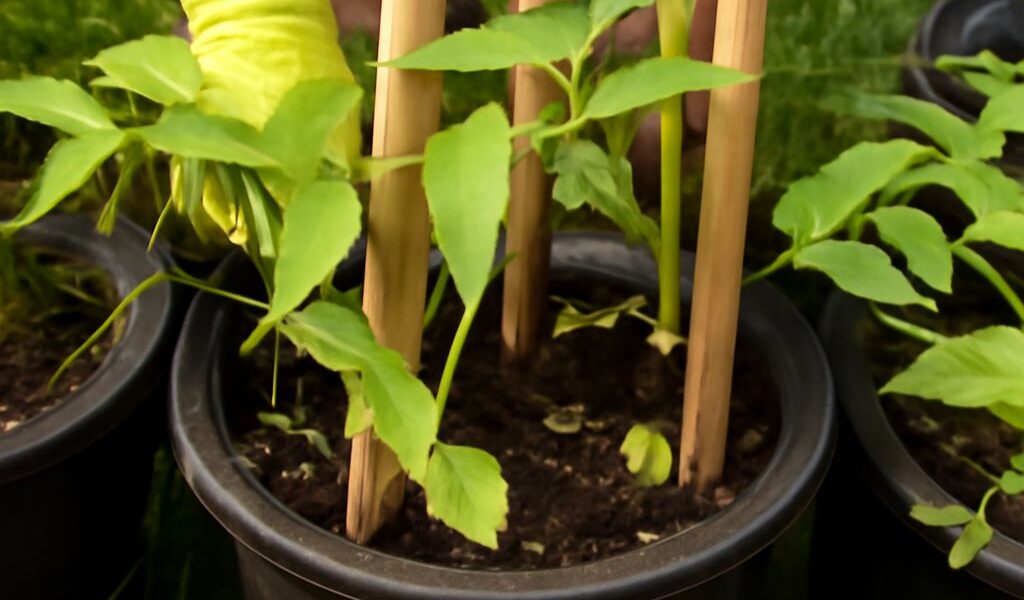
Install the support before sowing, when you can push stakes into the soil without damaging roots. A sturdy trellis about 6 feet tall, a row of poles connected with strong twine, or a teepee of securely tied poles gives vines something to wind around. Anchor it firmly; a mature wall of leaves can catch wind, especially after rain.
Bush beans grow as compact plants and usually need no tall support. Pole beans take longer to cover their frame, then continue producing over a longer period. Choose the type that fits both your space and the way you prefer to harvest. The seed packet should identify the growth habit and intended use of the variety.
Sow when the ground has warmed
Wait until frost danger has passed and the soil is warm. Cold, wet ground can rot seeds before they sprout, so a brief wait often gives them a better start than an early sowing. In areas with a short season, check the variety’s days to harvest against the time available before fall frost.
For anyone deciding how to plant pole beans, direct sowing beside the support is straightforward. Place seeds about 1 inch deep and 4 inches apart along a trellis, or sow two to four seeds at the base of each pole. Follow the seed packet if its directions differ for your variety. Cover gently, water the row, and keep the soil evenly moist while seedlings emerge.
Planting pole beans directly avoids disturbing young roots during transplanting. Once shoots begin to lengthen, guide them gently toward the support if needed. They will wind around a suitable pole or string as they grow. Avoid tying stems tightly; they need room to expand.
Care for the vines
Growing pole beans successfully requires consistent moisture, particularly when flowers and pods develop. Water at the soil surface when rainfall is insufficient, soaking the root zone rather than merely wetting the leaves. A layer of clean mulch can slow evaporation and limit soil splashing onto the foliage; leave a little space around the stems.
To raise climbing beans through the season, enrich the soil with a modest amount of finished compost. Avoid heavy applications of nitrogen fertilizer, which can encourage leafy growth at the expense of pods. A soil test can help you decide whether the bed needs additional nutrients rather than relying on a standard dose.
Keep the area around young plants weeded, taking care not to damage shallow roots. Once the vines cover their support, look through the foliage occasionally for pests or leaves with persistent spots. Watering at the base and allowing good airflow can help keep foliage dry; avoid handling wet plants when possible.
To understand how to grow pole beans well, watch their response to weather. Extreme heat during flowering can interfere with pod set even when the vines look vigorous. Keep moisture steady and give the plants time to resume flowering as conditions improve.
Pick for the harvest you want
For snap beans, choose pods while they are firm and tender, before the seeds bulge noticeably. Pick every few days as the crop develops; frequent harvest encourages continued production. Hold the stem with one hand and pick with the other so the vine stays attached to its support.
For shell beans, allow the seeds to fill the pods but harvest while they are still fresh, according to the variety’s directions. For dry beans, leave pods on the plant until mature and dry when weather permits. A variety grown for dry seed needs enough season to reach that stage; snap-bean timing alone is not a guide.
Notice trouble before it spreads
If leaves wilt and the soil several inches down is dry, water the root zone deeply and check it again after hot weather. If the soil is already soggy, hold off on more water and improve drainage where possible. A vine that sprawls on the ground instead of climbing may simply have missed its support: lift the growing tip gently toward a string or pole before it tangles with neighboring plants.