 Gloria Glover
 Lemon bee balm (Monarda citriodora) is a sun-loving mint-family annual or short-lived perennial recognized by narrow, citrus-scented leaves and stacked lavender flower heads. We can use it as a nectar plant in a dry-to-moderately moist pollinator bed, then choose milkweed by soil moisture rather than treating every species alike.
Among the main types of milkweed, butterfly milkweed suits dry sites, swamp milkweed needs consistently moist ground, and common milkweed occupies a middle range. The best pairing depends on sun, drainage, mature height, and whether spreading is acceptable.
How to identify lemon bee balm
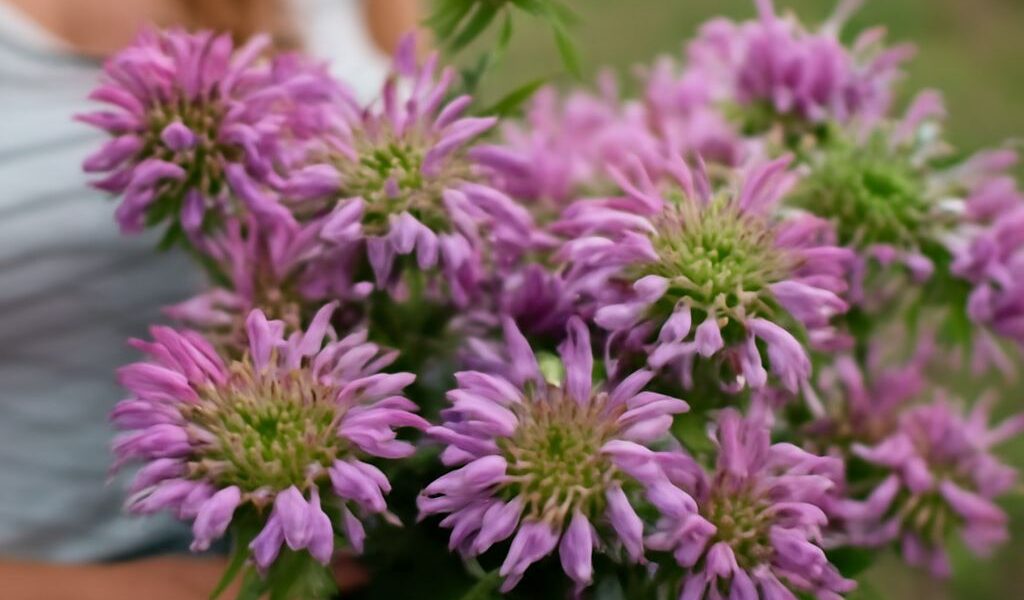
Start with the whole plant, not one scent or a square stem. Lemon bee balm typically forms an upright, branching plant 1 to 3 feet tall. Its stems are square, but that feature also occurs in many other aromatic plants. The reliable combination is narrow opposite leaves, a strong lemony odor when bruised, and dense flower clusters arranged in tiers around the upper stem.
Each cluster has small, two-lipped, lavender to pink flowers and often colorful leafy bracts. Flowering commonly begins in late spring or summer, depending on region and rainfall. A plant lacking the citrus scent or tiered tubular flowers deserves a closer identification check.
Bee balm leaves, scent, and growth habit
Bee balm leaves vary across the genus, so leaf shape helps separate lemon bee balm from familiar perennial bee balms. Lemon bee balm leaves are usually narrow, lance-shaped to linear, green, opposite, and edged with fine teeth. They have short stalks and may become smaller toward the flowering stem.
When we crush a leaf gently, the aroma is lemony and herbal, sometimes reminiscent of oregano. By contrast, scarlet or wild bee balm often has broader, oval leaves and a stronger minty fragrance. Lemon bee balm branches freely and may complete its life cycle in one season; in suitable climates, it can reseed. Full sun and sharp drainage help prevent lanky growth and root problems.
Types of milkweed by habitat, moisture, size, and growth habit
Choose among the types of milkweed by matching native range and site conditions. These are common garden choices:
- Common milkweed (Asclepias syriaca): Native across much of eastern and central North America, it grows 2 to 6 feet tall in average, well-drained soil. Broad leaves and spreading rhizomes help it form colonies, so give it room.
- Swamp milkweed (Asclepias incarnata): This 3- to 5-foot eastern and central species prefers consistently moist soil, rain gardens, and wet meadows. It forms upright clumps with narrow leaves and pink flower clusters.
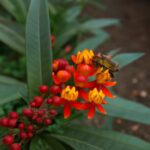
- Butterfly milkweed (Asclepias tuberosa): Growing 1 to 3 feet tall, it suits dry, sharply drained sites. Its vivid orange flowers and deep root make it a strong choice for prairies and sunny borders, though it establishes slowly.
- Whorled milkweed (Asclepias verticillata): This slender, 1- to 3-foot plant tolerates dry prairie conditions. Thin leaves circle the stems, while small white-green flowers create an airy form that can spread gradually.
Using lemon bee balm and milkweed in a pollinator garden
Place lemon bee balm in the sunny, well-drained portion of the planting, where its branching stems can fill gaps between taller plants. Use butterfly or whorled milkweed for dry beds, common milkweed where moderate moisture and space support a colony, and swamp milkweed beside a consistently damp area.
Check mature height before combining them: keep 1- to 3-foot plants near the front, and reserve taller common or swamp milkweed for the back or a naturalized section. This arrangement gives bees and butterflies nectar from lemon bee balm and milkweed while providing monarch caterpillars with an appropriate milkweed host.