 Gloria Glover
 What is habitat destruction? It is the removal or severe alteration of the places organisms need for food, water, shelter, and reproduction. In a desert, where resources are already limited and widely scattered, damaging one habitat feature can affect many species.
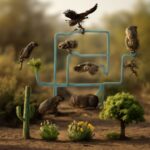
We can see this clearly by starting with a food chain in the desert, then expanding it into a food web. A chain follows one feeding path, while a web shows several overlapping paths among producers, consumers, and decomposers.
A Simple Food Chain in the Desert: A Sonoran Example
Cacti, Insects, Lizards, and Hawks
One representative Sonoran Desert chain is:
Prickly pear cactus → cactus bug → desert spiny lizard → Harris’s hawk
The prickly pear is the producer because it makes food through photosynthesis. The cactus bug is a primary consumer that feeds on the plant. A desert spiny lizard can eat the insect, making it a secondary consumer, while a Harris’s hawk may prey on the lizard. Each step transfers energy upward, although some energy is lost as organisms live and move.
How a Desert Ecosystem Food Web Connects Species
Multiple Feeding Links
A desert ecosystem food web is not a longer version of one chain. It combines many chains that share organisms and resources. For example, prickly pear fruit and seeds may feed white-winged doves, rodents, and insects. Desert grasses can feed grasshoppers and seed-eating rodents. Those consumers may then become food for lizards, snakes, roadrunners, owls, and hawks.
The same predator can also connect separate pathways. A hawk may eat a lizard, snake, or rodent, while a lizard may eat grasshoppers, beetles, and other insects. If one food source declines, a predator may switch to another, but only if suitable alternatives remain.
The Role of Decomposers
Decomposers, including fungi and bacteria, break down dead plants, animals, and waste. Detritivores such as termites and some beetles help fragment this material. The resulting nutrients return to the soil, where plants can use them again. This recycling supports the producers at the base of the web, even in nutrient-poor desert soils.
What Is Habitat Destruction in a Desert?
Habitat destruction occurs when development, mining, road construction, agriculture, groundwater pumping, or off-road traffic removes or degrades habitat. Destruction can eliminate plants directly, drain or pollute scarce water, compact soil, bury burrows, and remove nesting or hiding places. It is different from normal desert dryness because human activity can permanently reduce the habitat’s ability to support its community.
How Habitat Destruction Changes the Desert Food Web
When Plants and Water Decline
Suppose land clearing removes prickly pear and other native plants. Fewer plants mean fewer cactus bugs, grasshoppers, fruits, and seeds. Lizards and rodents then lose food, and hawks, owls, and snakes lose prey. If groundwater pumping dries a spring, insects, amphibians, birds, and mammals may disappear from that part of the web, even when surrounding plants remain.
When Shelter and Soil Are Lost
Bulldozing and vehicle traffic can crush burrows, nest sites, and soil crusts. Rodents and reptiles become more exposed to heat and predators, while fewer insects survive in damaged soil. With less dead plant material and fewer soil organisms, decomposition and nutrient recycling also slow. The result is a weakened web with fewer feeding links and less recovery after drought.