 Gloria Davis
Water can leave an unglazed clay pot through its walls as well as its drainage hole. A glossy finish changes that exchange, often keeping the potting mix moist for longer. Glaze-finished containers can be useful in a dry room or a hot garden, but a beautiful glazed ceramic container still needs the right size, drainage and watering routine for the plant inside it.
Glazed Ceramic Planters and the Clay Beneath
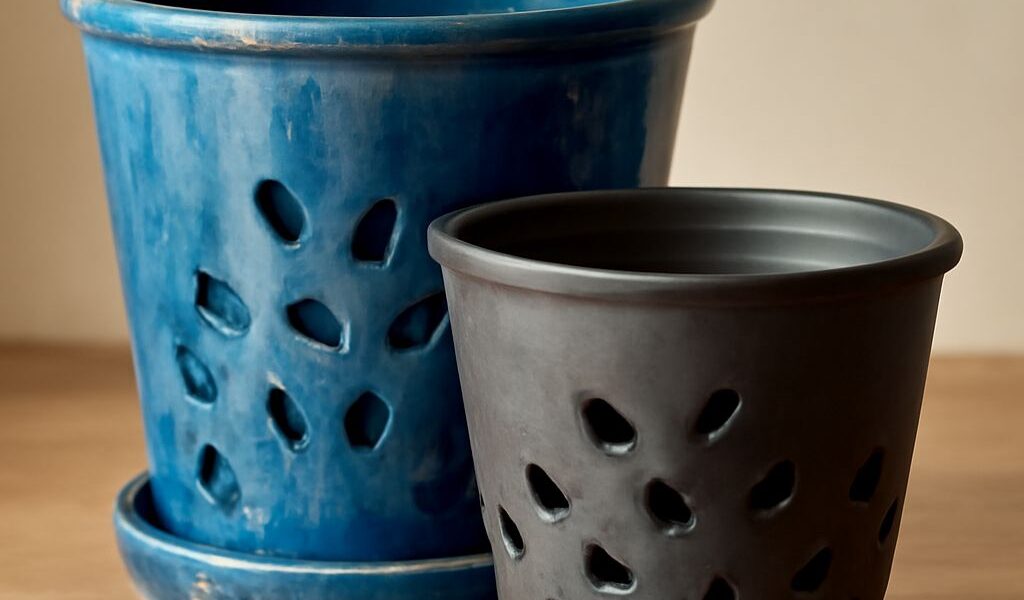
Glazed ceramic planters are fired clay containers with a glasslike surface. Some are glazed inside and out; others expose clay on the interior or base. The clay body, firing and coverage vary by product, so the shine alone does not tell you whether a particular pot will withstand frost or how quickly it will dry. Ask the maker about the intended use and inspect the actual container before buying.
Glazed terracotta pots combine a clay body with a surface coating. Unglazed terracotta, by contrast, is porous and generally loses moisture through its sides more readily. Colorado State University Extension notes that glazed containers tend to retain water longer than porous clay. Sun, wind, pot size, mix and the plant’s roots also affect drying, so neither material replaces checking the soil.
For a thirsty plant in a warm room, a less porous vessel may reduce how often watering is needed. For a plant that dislikes prolonged wetness, unglazed clay can be helpful, provided it has drainage and a suitable mix. The difference is a guide, not permission to leave either plant sitting in water.
A growing pot or a decorative cover?
A growing container needs a way for excess water to leave the root zone. Turn the pot over before purchase and look for an open drainage hole. If glazed flower pots have holes, choose a saucer to protect the surface beneath and empty it after watering. A hole can become blocked by compacted mix or roots, so check that water actually exits.
A decorative cachepot may have no opening at all. It can still hold a plant if the plant remains in a smaller nursery pot with drainage holes. Lift the inner pot out to water it, let it drain, and empty any water that collects in the outer cover before replacing it. Illinois Extension explains why the liner should not stand in that collected water.
A layer of stones under potting mix does not create a substitute drain. Water can accumulate above the change in material, leaving roots in a wet zone. Use an appropriate potting mix throughout the growing pot and provide an actual exit for excess water. Avoid drilling an unfamiliar ceramic vessel unless the manufacturer says it is suitable and you have the proper equipment; the pot may crack.
Match size and weight to the location
Choose a pot that accommodates the root ball with a modest amount of room to grow. A container far larger than a small plant can hold more wet mix than its roots can use promptly. If roots circle densely or the plant dries unusually quickly, check whether it needs a slightly larger home. The NC State Extension container guide discusses matching pot size to the plant and using a suitable growing medium.
Consider the final weight, not just the empty vessel. A ceramic planter filled with damp mix and a mature plant may be difficult to lift, particularly on a balcony or shelf. Set a heavy container on a stable surface and check the capacity of the support. A removable nursery pot can make seasonal moves easier, though the outer cover still needs a safe place to sit.
A wide pot can stabilize a top-heavy plant; a deep-rooted species may need more depth. Compare the root system and mature size with the container’s inside dimensions. Avoid purchasing by the outside diameter alone if thick walls or a narrow opening leave little usable space.
Weather, cleaning and reuse
A glaze is not a universal frost-proof guarantee. Water absorbed by clay or trapped in a container can contribute to cracking during freezing weather, and construction differs among products. Check the maker’s instructions for the specific pot. If outdoor storage is uncertain, empty and dry the vessel and move it to a sheltered, frost-free place before freezing conditions arrive. Protect plants according to their own cold tolerance as well.
Before reusing a ceramic vessel, remove old mix and debris, scrub it with soapy water and rinse. If the previous plant had disease or the pot needs disinfection, use a product suitable for the material and follow its label, including contact time and rinsing instructions. NC State Extension recommends cleaning and sanitizing containers before use. Inspect for chips and cracks, and avoid using a damaged rim where it could cut hands or stems.
Reusing an intact pot can extend its working life, but a longer life does not by itself establish the total environmental impact of a particular product. Transport, firing, material and replacement all matter, and those details differ. Choose a vessel you can maintain and use repeatedly, rather than assuming that a material label supplies a complete footprint.
Glazed pots earn their place when their size, drainage and weight fit the plant and the setting. Check the root zone and local weather, then select the container and watering routine that make those conditions manageable.