 Gloria Davis
A waterproof liner does not automatically make a planter better for a plant. If water collects around the roots with no way out, the mix can remain saturated and leave too little air for healthy growth. A planter’s liner must suit both the plant and the way water will be managed.
Liners for flower boxes can protect an outer box or make seasonal planting easier to change. The important distinction is whether the liner is the growing container, with its own drainage, or a decorative shell that catches water from a separate pot.
Flower box liners: Start with the dimensions
Measure the inside length, width, and usable depth of the box, including any narrowing toward the bottom. Compare those measurements with the liner’s outside dimensions, not just the size printed on its label. Leave enough clearance to lift it out when wet and full; potting mix, plants, and water can make a surprisingly heavy load.
Next consider the space inside flower box liners. Roots need enough depth and volume for the mature plants, and a very shallow insert dries quickly. A row of lettuce can use a shallower box than a large tomato. Check the crop’s recommended container size, then choose the liner to fit that requirement rather than filling every inch with plants.
If the outer box is long, two smaller planter box inserts may be easier to lift and empty than one full-length piece. Check their combined length and ensure that each has adequate growing space and drainage. A narrow gap at the ends can make removal easier and allow you to inspect the box beneath.
Follow the water out
For most plants, the growing container needs holes or slits at its base. If the outer planter also has drainage, make sure its openings are clear and that excess water can leave both layers. Raise the inner container slightly if necessary without blocking its holes, and direct runoff away from a wall, deck, or neighbor below.
Some planter liners serve as decorative cachepots with no hole because their job is to catch water. Place a removable, perforated nursery pot inside it, water over a sink or into the shell, and empty any collected water promptly. Do not let the inner pot sit in the puddle. Illinois Extension recommends checking the outer container and draining accumulated water.
A deliberately designed self-watering system works differently: it uses a reservoir, a way to draw water into the mix, and an overflow outlet. Follow the manufacturer’s directions for its water level. An ordinary sealed box without those features should not be treated as a self-watering planter.
Do not place gravel beneath the mix as a substitute for drainage holes. It takes up root space and can leave the mix above it saturated. University of Maryland Extension explains that gravel in the bottom does not improve container drainage.
Compare materials and maintenance
Rigid plastic: Lightweight plastic window box liners are easy to remove and clean, and their nonporous walls slow moisture loss compared with more porous materials. Make sure drainage holes are open; some products arrive with holes that must be punched out. Choose sturdy material that will not crack when lifted full, and consider how much sun and freezing weather it will face.
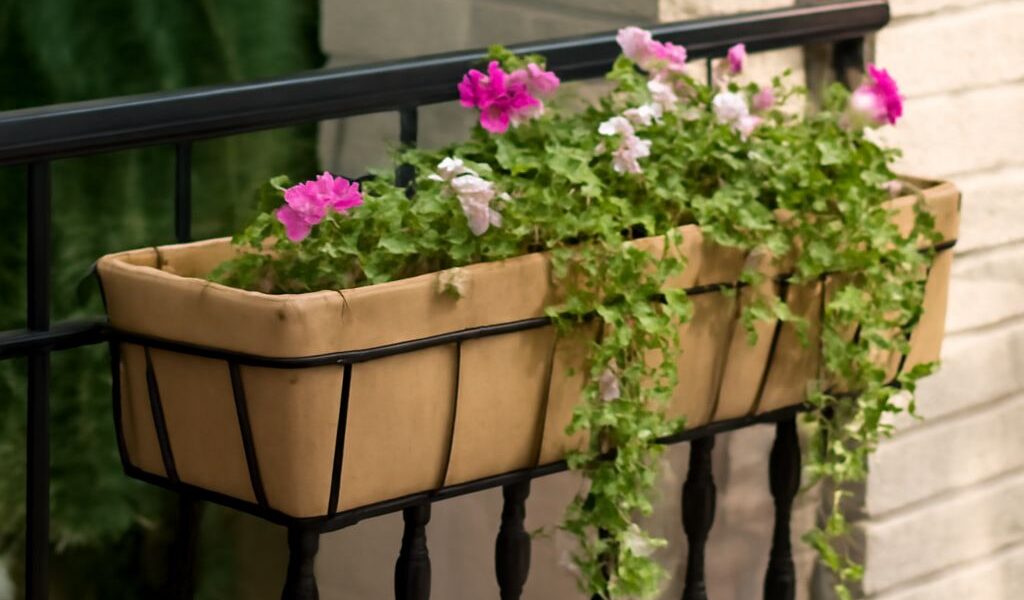
Coconut coir: A molded coir liner holds mix inside an open wire basket and gives it a natural appearance. Air and water can move through the fibers, but exposed sides can dry quickly in hot or windy weather. Check moisture frequently and expect the liner to weather over time. A perforated inner layer can slow water loss while preserving an outlet for excess water.
Reusable inserts: Rigid inserts for planter boxes can be used for several seasons if they remain sound. Wash off old mix and roots after use; clean and disinfect it before replanting, especially if disease was present, following a local extension’s directions. Do not reuse a cracked insert that leaks where you cannot manage the water. For edible crops, use a food-grade container and avoid repurposed vessels that held chemicals.
A thin liner for a planter can protect a wooden box, but it needs drainage openings aligned with those in the wood if plants grow directly inside it. It may reduce the wood’s contact with wet mix without making the whole assembly waterproof. Inspect the underside and joints periodically: trapped water between layers can still damage a box.
Water for the insert you actually use
Fill the growing liner with a lightweight potting mix suited to containers. Water slowly until excess leaves the drainage holes, then check the outer shell and empty it if needed. Before watering again, feel the mix below the surface; the schedule depends on plant needs, weather, and volume.
If water runs down a dry gap at the edge while the center remains dry, water slowly in stages so the mix can absorb it. In a coir basket, hot wind may call for more frequent checks than in a plastic window box insert of the same size. A larger volume can hold more moisture, but its weight must be supported securely by the window-box brackets.
For a wooden window box that needs protection and easy seasonal changes, choose removable, drainable plastic inserts that fit its interior, then provide a clear path for runoff. For an indoor decorative shell without a hole, choose a separate nursery pot you can lift and empty after watering. In either case, size the growing space for the roots first.