 Gloria Glover
Coral reefs are among the most complex and diverse ecosystems on the planet. At the heart of this complexity is the coral reef food web, a dynamic network of interactions among various marine organisms. Understanding this web is crucial for appreciating how energy flows through these vibrant underwater landscapes and sustains their rich biodiversity.
What is a Coral Reef Food Web?
A coral reef food web is an intricate network that illustrates the feeding relationships between different organisms within the reef ecosystem. Unlike a linear food chain, which depicts a single pathway of energy flow, a food web consists of multiple interconnected pathways. This complexity allows for greater stability and resilience within the ecosystem, as organisms have various dietary options and energy sources.
Key Players in the Coral Reef Food Web
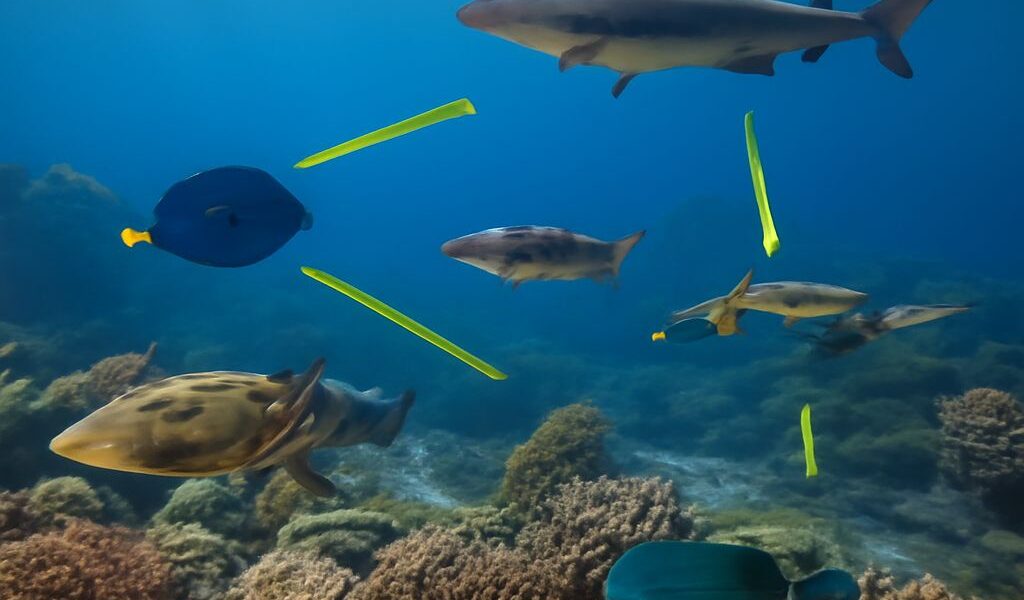
The coral reef food web includes several key players, each with a specific role. Producers, such as phytoplankton and zooxanthellae (the symbiotic algae living within coral tissues), form the foundation by converting sunlight into energy through photosynthesis. Primary consumers, like small fish, snails, and sea urchins, feed on these producers. Secondary consumers include larger fish and invertebrates that prey on the primary consumers. At the top are apex predators, such as sharks and larger fish species, which maintain the balance by regulating the populations of other organisms.
Energy Flow in Coral Reef Ecosystems
Energy flow in coral reef ecosystems begins with the conversion of solar energy by producers. This energy is then transferred through the food web as organisms consume one another. The efficiency of this energy transfer diminishes at each trophic level, as energy is lost through metabolic processes and heat. Despite this, coral reefs are incredibly productive due to the efficient recycling of nutrients and the presence of mutualistic relationships, such as those between corals and zooxanthellae.
Differences Between Food Web and Food Chain
While both the coral reef food web and a food chain describe feeding relationships, the scale and complexity differ significantly. A food chain represents a singular, linear sequence of organisms, where each feeds on the next. In contrast, a food web captures a more comprehensive and realistic picture of an ecosystem, illustrating multiple connections and pathways. This complexity means that if one species were to decline, others could fill its ecological niche, providing greater ecosystem stability and resilience.