 Gloria Davis
A common misconception is that a rose with tiny flowers is naturally an easy houseplant. In fact, a small rose bush has the same basic appetite for light, air, and well-drained soil as its larger relatives. A flowering gift can brighten a table for a short visit, but a little rose plant kept there indefinitely may exhaust its blooms and weaken.
A lasting home begins with a choice: a bright indoor growing spot, preferably with supplemental light, or a container outdoors where the plant can follow the seasons. Either way, the pot should make it possible to water thoroughly without leaving roots in stagnant water.
Mini Rose Plant: Choose for the Space You Have
The word “miniature” describes the scale of the flowers and leaves more reliably than the final height of every variety. Before choosing a mini rose plant, read the cultivar label for its mature height and spread, flowering habit, and suitability for your climate. Some remain compact; others grow taller or spread more widely than a gift-size pot suggests.
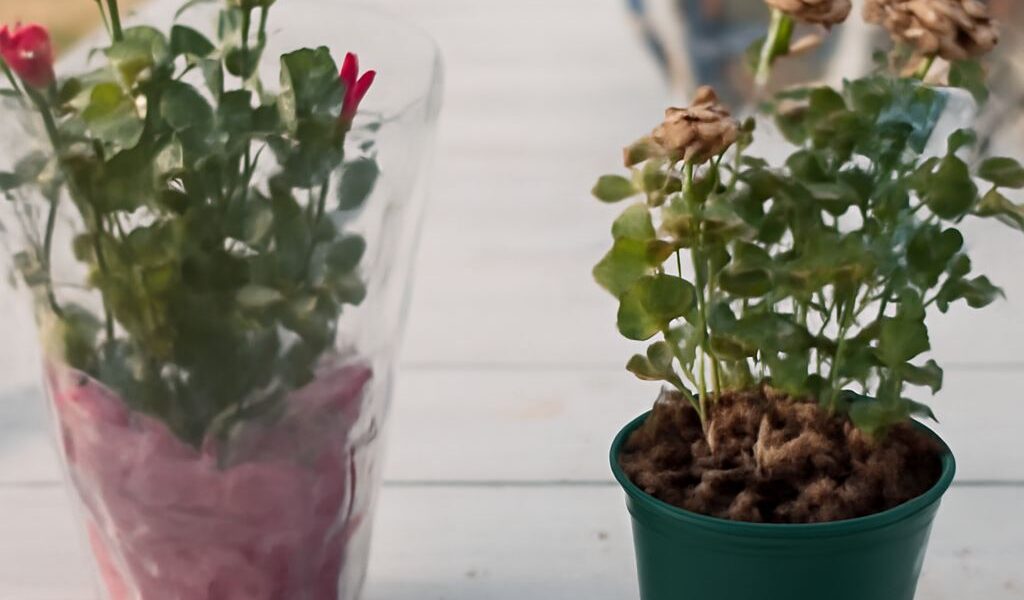
Look for green leaves, firm stems, and new growth. Check the undersides of leaves for webbing or clusters of insects, and pass over plants with extensive yellowing or spotted foliage. A few fading flowers are less revealing than the condition of the leaves and stems beneath them.
A miniature rose bush can outgrow its nursery pot. Once roots fill the container or water runs through very quickly, move it into a slightly larger pot with drainage holes. Use a quality potting mix, keeping the plant at roughly the same soil level. Remove decorative foil or open it around the drainage holes, and empty any saucer after watering.
Give the Leaves Enough Light and Air
For an outdoor container, choose a place with at least six hours of direct sunlight where the plant has room for air to move around its foliage. In very hot weather, watch the pot closely: a small volume of mix can dry out rapidly in sun and wind.
For growing miniature roses indoors, a south- or west-facing window is a promising location. Window glass and surrounding buildings reduce the light a plant receives, especially in winter. If growth becomes pale and stretched or flowering dwindles, add a grow light above the foliage and follow the lamp’s distance and timing instructions. Texas A&M notes that miniature roses need long periods of bright light to flower well.
Keep foliage clear of curtains and neighboring pots. Gentle air movement helps leaves dry after watering; a small fan can help in a still room. Avoid placing the plant against a heating vent, where hot, dry air can accelerate moisture loss.
A tabletop display can last through the flowers already open, especially away from hot, direct sun that ages blooms quickly. For long-term growth, move the plant back to its brighter growing place. If moving it outdoors, introduce direct sun gradually over several days so leaves have time to adjust.
Water the Roots, Then Let the Pot Drain
Check the soil surface with a finger rather than watering on a fixed calendar. When the surface feels dry, water slowly until excess flows from the bottom. Let the pot drain and discard water in the saucer. Small rose plants on a breezy patio may need frequent checks; a cool room calls for less frequent watering.
The care of miniature roses depends on this balance: the root ball should not repeatedly dry to a hard mass, yet it should not sit saturated. If water runs down the gap between a dry root ball and the pot, water slowly in stages until the mix is evenly moist. Drainage holes and a porous mix allow air to return to the spaces around roots.
Feed during active growth with a fertilizer labeled for roses or flowering plants, following its directions for container plants. Avoid adding extra fertilizer to a thirsty plant; water first. Remove spent flowers, cutting back to a healthy leaf, and take away dead or damaged stems with clean pruners.
Follow the Seasons
Many varieties flower repeatedly during the growing season, with pauses between flushes. Buds need energy made by healthy leaves, so light, water, and nutrition all influence the next display. Check the label for the flowering pattern of the variety you choose; a plant resting in dim winter light will generally grow and flower less actively.
Miniature rose bushes in pots need a winter plan before freezing weather arrives. Above-ground containers expose roots to colder temperatures than garden soil. In a cold climate, Iowa State University suggests placing the pot in a sheltered hole in the ground and covering the lower canes with soil for winter, or bringing it indoors before a hard freeze to a sunny window or artificial light. Adapt the timing to local conditions and the cultivar’s hardiness. Indoors, keep checking moisture as growth slows.
Read the Leaves
A miniature rose’s foliage gives an early account of its surroundings. Dry, drooping leaves and a dry potting mix point to a need for water; a persistently wet mix calls for checking drainage and letting the surface dry before watering again. Fine webbing or speckled leaves can signal spider mites, especially in dry indoor air. Inspect leaf undersides, isolate the affected plant, and rinse the foliage with water; repeat inspections to see whether the problem is receding.
If a small rose plant has healthy leaves but produces long, weak shoots and few flowers, move it toward stronger light or add a grow light. New, sturdier growth and fresh buds will show whether the change is helping.
Sources: Iowa State University Extension: miniature rose care; Iowa State University Extension: overwintering a potted miniature rose; Texas A&M: miniature rose.