 Gloria Davis
Paper white flowers bring vibrant, fragrant life indoors during the quietest winter months. Known for their clusters of delicate, snowy blooms and sweet scent, paperwhites are among the easiest bulbs to grow inside when outdoor gardens sleep. Whether we’re new to indoor bulb forcing or seasoned plant lovers, paperwhites deliver quick results and a bit of winter magic. Here’s everything we need to know to grow, enjoy, and troubleshoot paper white flowers in our own homes.
What Are Paper White Flowers?
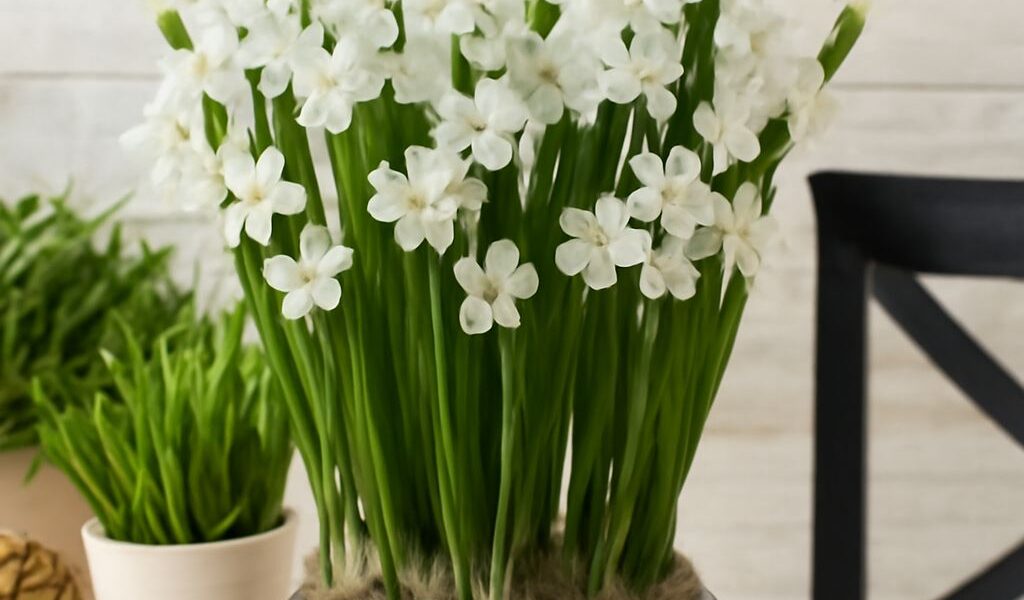
Paper white flowers are the common name for Narcissus papyraceus, a member of the daffodil family. Unlike their spring-blooming daffodil cousins, paperwhites are native to the Mediterranean and thrive indoors, making them popular for winter displays. Their star-shaped, white blossoms grow in clusters atop slender green stems, filling a room with a fresh, floral fragrance.
Paperwhites don’t require a cold period to bloom, which sets them apart from many other flowering bulbs. This quality makes them ideal for indoor forcing—meaning we can coax them to bloom in the middle of winter without a garden or special equipment. Most commonly, we find classic white-flowered varieties such as ‘Ziva’, prized for their strong scent and reliable bloom time. Other options like ‘Inbal’ offer a subtler fragrance, while ‘Ariel’ is known for larger flowers and a slightly longer bloom period.
We can grow paperwhites in soil or simply in a decorative container with water and pebbles. Their ease and speed—often blooming within three to five weeks of planting—make them favorites for holiday decor, gifts, and uplifting our homes during the cold season.
How to Grow Paperwhites Indoors
Growing paperwhites indoors is straightforward and rewarding, even for beginners. We begin by selecting high-quality, firm bulbs that show no signs of mold or soft spots. Paperwhites can be grown in shallow bowls with just water and stones, or in small pots filled with well-draining potting mix.
To plant in a decorative bowl, we:
- Add two to three inches of clean pebbles or marbles to the bottom of the container.
- Set the bulbs on top, pointed side up, nestling them close together but not touching.
- Add more pebbles around the bulbs’ sides to hold them in place, leaving the tops exposed.
- Add water until it just reaches the base of the bulbs—avoid submerging them, as this can cause rot.
If using soil, fill the pot with potting mix, plant the bulbs so the top third is exposed, and water lightly. Paperwhites do best with bright, indirect light. Place the container in a cool room (50-60°F) for the first week to encourage strong root growth, then move to a warmer, sunnier spot.
Blooms appear within three to five weeks. For a continuous display, we can stagger plantings—starting a new batch every week or two throughout the winter. This way, we always have fresh paper white flowers to enjoy.
Caring for Paper White Flowers
Once paperwhites begin to sprout, regular care ensures beautiful blooms. We should maintain the water level so it just touches the bottom of the bulbs, checking every few days and topping up as needed. If growing in soil, water sparingly—overwatering leads to bulb rot.
Paperwhites grow tall and sometimes become floppy. To keep stems upright, rotate the container every few days so growth remains straight. A popular tip is to add a small amount of alcohol (such as diluted gin or vodka) to the water once roots have developed—this can stunt excessive stem growth and keep paperwhites compact. Mix one part clear alcohol to ten parts water after roots are established, and use this in place of plain water.
Keep the plants in a bright spot, but avoid direct, scorching sunlight, which can dry out the blooms quickly. Paperwhites do not require fertilizer during their short growing cycle. After flowers fade, we can compost the bulbs, as indoor-forced bulbs rarely rebloom successfully.
Common Issues and How to Fix Them
While paperwhites are easy to grow, a few common problems can arise. If bulbs or roots develop a mushy texture or foul smell, they are likely rotting—usually from too much water. Always make sure the water just touches, not covers, the base of the bulbs, and provide good drainage if planting in soil.
Leaning or floppy stems are another frequent issue. This can result from low light or high temperatures. Moving the container to a cooler, brighter location and using the alcohol method can prevent lankiness. For extra support, we can stake the stems or group the bulbs for mutual support.
If the blooms appear stunted or fail to open, the bulbs may have been exposed to excessive heat or received too little light. Ensuring proper placement and starting with healthy bulbs makes a big difference. With these tips, we can enjoy thriving paper white flowers—bringing color and fragrance to winter days indoors.