 Gloria Davis
A shiitake mushroom is the brief visible fruit of a fungus that has spent much longer spreading through wood. Its network of fine threads, called mycelium, draws nourishment from the material around it before a cap appears.
You can cultivate shiitakes at home with a ready-to-fruit block or introduce a purchased culture into hardwood logs. The first approach offers a quicker introduction; the second asks for patience, an outdoor space and attention to moisture over many months.
Growing shiitake mushrooms: kit or logs?
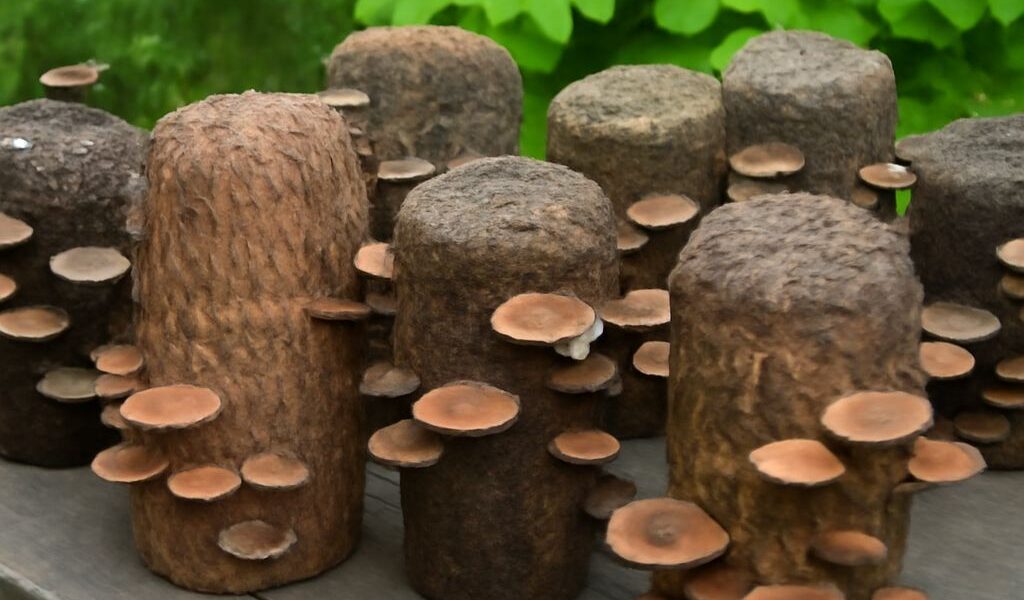
A shiitake mushroom growing kit usually contains a prepared substrate already colonized by the fungus. It is useful when you have limited space and want to observe the fruiting stage without drilling or waiting for a log to colonize. The supplier’s directions matter because blocks differ in maturity, packaging and the conditions needed to start them.
A log project begins earlier in the cycle. You obtain suitable hardwood and introduce spawn: living shiitake mycelium carried in material such as sawdust or wooden plugs. The fungus then grows through the wood, a phase called the spawn run. Cornell Small Farms explains that spawn contains vegetative mycelium rather than spores.
Both methods can produce more than one flush, or wave of mushrooms, but timing and yield vary with the culture, substrate and care. A kit trades much of the preparation for convenience; logs can remain productive over several seasons if conditions support them.
Starting a prepared block
Buy a shiitake mushroom kit from a reputable supplier that identifies the species, strain and instructions. Open it when you can maintain the recommended environment, and read whether the block needs soaking, unpacking or a period of rest before fruiting. Use the supplier’s temperature range: strains differ, and a room that is comfortable for one may be too warm for another.
Place the block in bright, indirect light with fresh air and the humidity specified by the maker. A loose humidity tent or fruiting chamber can reduce drying, but it needs ventilation; a sealed, stagnant bag can encourage problems. Mist as directed rather than leaving the block sitting in water. Keep the surrounding area clean, wash your hands before handling the block and use clean water and tools.
Small pins may develop into caps over several days when conditions are favorable. After the first flush, remove remaining stems and let the block rest according to its instructions. A later soak or change in conditions may initiate another flush. If an unusual mold or foul smell develops, stop using the block and ask the supplier for guidance.
Choosing and inoculating logs
When growing shiitake mushrooms outdoors, start with freshly cut, healthy hardwood from a source that permits its use and follows local firewood movement rules. Oak is a common choice. Avoid rotten wood and logs whose bark has been badly damaged, since exposed wood and existing fungi can make colonization harder. Cornell Extension suggests manageable logs roughly 3 feet long and 4 to 6 inches in diameter.
Order fresh spawn from a reliable supplier and select a strain suited to the fruiting temperatures in your area. Store it as instructed and inoculate promptly. Drill holes in a staggered pattern, using the bit and spacing specified for the plugs or sawdust tool. Insert spawn into each hole, then seal the openings with food-grade wax to retain moisture and reduce entry points for competing organisms. Use care with hot wax and power tools.
Knowing how to grow shiitake mushrooms also means giving the log time. Set inoculated wood in a shaded, protected place with air circulation, raised clear of soil where practical. Keep it from drying out; rainfall and occasional watering or soaking can maintain moisture. Avoid enclosing logs in airtight plastic, where stagnant conditions can encourage unwanted growth.
Wait, fruit and rest
Colonization is slow. Cornell Small Farms gives a general range of 6 to 18 months for logs and stumps, depending on conditions. Keep a record of inoculation date, strain and watering so you can judge progress without expecting a harvest on a fixed day.
Once a log is fully colonized and the strain’s temperature conditions are suitable, soaking it in clean, cool water for about 12 to 24 hours can encourage fruiting. Let water drain and return the log to its shaded site. Mushrooms may also appear naturally after suitable weather. Give a producing log a rest between forced flushes: Cornell growers describe roughly seven to eight weeks in warm months, allowing time for the fungus to recover. A dry log may need moisture during that rest.
Harvest and handle with care
Harvest cultivated caps while they are firm, before they become overmature and ragged. Cut the stem close to the surface with a clean knife or remove it gently, avoiding damage to the block or bark. Refrigerate the harvest promptly in a breathable paper bag and use it while fresh; cook shiitakes thoroughly before eating.
Outdoor logs can also host other fungi. Harvest only mushrooms you can confidently identify as your cultivated shiitakes; if identification is uncertain, do not eat them. Yield will change with weather, log quality and competing organisms, and a quiet log may need more time or different moisture rather than another soak immediately.
To begin with a kit for growing shiitakes, choose a reputable supplier and prepare the recommended fruiting space. For a log project, first locate suitable fresh hardwood, a shaded resting place and spawn matched to your climate.