 Gloria Davis
Can you grow a Japanese maple from the winged seeds beneath a tree? Yes. Collect mature fruit in fall, give the seed a period of moist winter cold, and care for the emerging seedlings in a sheltered place. A maple grown from seed may look different from the parent, so choose this method for the pleasure of raising a new tree rather than reproducing a named cultivar exactly.
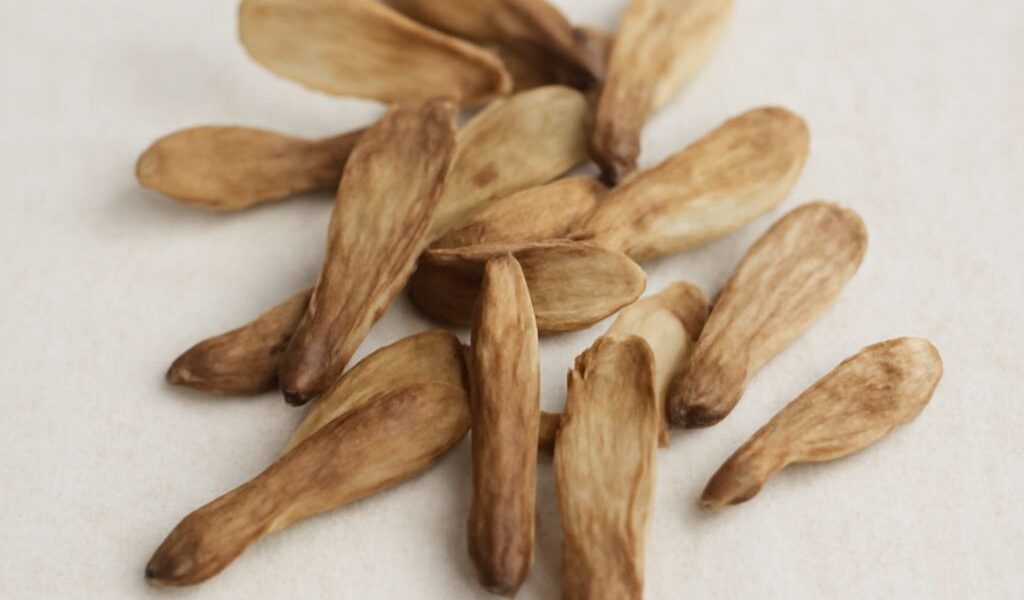
A Japanese maple’s seed develops inside a winged fruit called a samara. Confirm the parent tree’s identity before collecting, and plan where the young plants can spend their first season: they need protection from drying wind, harsh afternoon sun, and waterlogged soil.
Japanese Maple Seed Collection and Identification
The name Japanese maple is used for more than one species; this guide focuses on Acer palmatum. Check the tree’s nursery label or use a regional tree guide to identify the parent, rather than assuming every winged maple fruit comes from the same species. Its leaves typically have pointed, handlike lobes, but leaf color and shape vary among cultivated forms. Yale’s tree profile illustrates its leaves and paired samaras.
Collect Japanese maple seeds in autumn when the winged fruit has matured and begun to fall. Mature maple samaras generally change from green toward yellow or brown; gather more than you need because some may be empty, damaged, or unable to germinate. Take only material you have permission to collect, and label it with the parent tree and date.
Remove the papery wings carefully, without crushing the seed. Discard visibly moldy or badly damaged material. A firm-looking seed is encouraging, but appearance alone cannot prove it will sprout. If buying, request fresh material labeled with the species and collection date, and follow any supplier instructions about storage and pretreatment.
Give Dormant Seed a Winter
Dormancy keeps a seed from germinating immediately even when it is alive. Cold, moist conditions over winter help prepare many temperate maple seeds to grow when spring returns. The Royal Horticultural Society’s guide recommends sowing freshly collected material in fall and leaving the pot in a cold frame or sheltered outdoor position through winter.
For that approach, fill a pot with a free-draining seed-starting mix and make sure the bottom has drainage holes. Sow the seeds thinly, cover lightly with mix, water gently, and label the pot. Place it outside in a sheltered cold frame or protected spot where winter temperatures can act on it. Keep the medium slightly moist, not saturated, and protect it from rodents with a securely fitted mesh cover. Check periodically so the container neither dries completely nor stands in water.
If outdoor winter conditions are unreliable, a refrigerator offers a controlled alternative. The 2008 U.S. Forest Service Woody Plant Seed Manual lists 60 to 120 days at 34–46°F for fresh and dry A. palmatum seed. For dry seed it also lists a one- to two-day soak, starting in water at 104–122°F and letting it cool gradually; follow supplier advice for your seed lot. Mix the Japanese maple seed with barely moist, clean sand or vermiculite in a labeled bag and refrigerate within that range, without freezing. Check regularly for mold, drying, or emerging roots; sow a sprouting seed promptly with the root downward. Requirements vary among seed lots, and some may germinate slowly or need additional treatment.
Sow and Care for Young Trees
Move a pot of treated Japanese maple tree seeds to a sheltered, bright position as spring arrives. Keep the mix evenly damp while it drains freely. Germination may be uneven: allow time for later seedlings rather than assuming every seed will emerge together. A clear cover can hold humidity briefly, but remove it when shoots appear so air can circulate.
When seedlings have developed several true leaves and are large enough to handle, lift each gently by a leaf, keeping as much root as possible. Move it into its own draining pot of suitable potting mix. Water after transplanting and give it light shade while it recovers. Avoid pulling on the tender stem or allowing roots to dry in the process.
Growing Japanese maple from seed requires attention beyond germination. Protect small plants from intense afternoon sun and drying wind; check containers often in warm weather because they dry faster than garden soil. Water when the mix begins to dry, letting excess run out. Avoid leaving pots in a saucer of standing water. As roots fill a pot, move the tree to a modestly larger container, or plant it in a suitable sheltered site after it has grown strong enough for local conditions.
A hard winter can freeze a small container much more thoroughly than the surrounding ground. A sheltered outdoor position or unheated protected frame helps moderate exposure, while preserving the seasonal rest of the young tree. Check moisture occasionally during mild spells.
Expect Variation in the Next Generation
Seedlings inherit a mixture of traits. The leaves may be green or reddish and differ in their degree of lobing; growth may be upright, spreading, or somewhere between. Color and form can also change as a tree matures and respond to growing conditions. The RHS notes that named selections do not breed true from seed.
Choose a seedling if you welcome that variation and have time to raise it. If a particular weeping form, mature size, or leaf color is essential to your planting plan, buy a healthy grafted plant of the named cultivar from a reputable nursery.
Sources accessed November 19, 2026.