 Gloria Davis
Before a forsythia opens its yellow flowers, the promise of spring is already held in buds along its older stems. Knowing how to cut back this shrub begins with recognizing those buds: remove the wrong wood at the wrong time, and a season’s color can disappear.
A thoughtful approach to shaping forsythia follows its natural arching habit rather than forcing it into a rigid outline. The right cuts depend on the plant’s age, its health, and the room it has to grow.
Why timing matters
Forsythia flowers on wood produced in the previous growing season. By winter, the buds for the coming display are already in place. Cutting back a healthy shrub in late fall or before bloom in spring removes some of those buds along with the branches. Penn State Extension explains why this timing matters for spring-flowering shrubs.
For routine work, wait until the flowers fade, then act promptly. This gives the plant time to produce shoots that can develop buds for the following spring. Watch the shrub in your own yard instead of relying on a fixed calendar date: flowering varies with local weather and variety.
Broken or diseased branches are a different matter. Remove hazardous or damaged wood when you notice it, even if doing so costs a few flowers. If you suspect disease, clean tools between cuts and follow local extension guidance for disposal.
How to Trim Forsythia While Keeping Its Natural Shape
To decide how to trim forsythia, start by stepping back and looking through the shrub. Find stems that are dead, damaged, rubbing, or growing into a path. Follow each one to its origin or to a healthy side branch before cutting. This opens space within the plant instead of leaving a collection of short stubs at the surface.
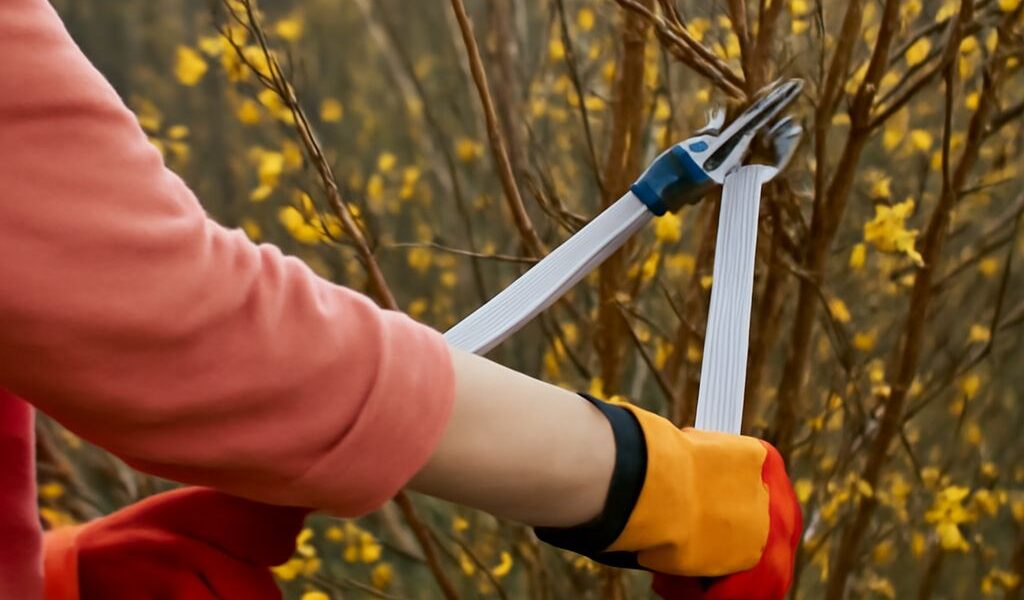
Use clean, sharp hand pruners for small stems and loppers for thicker ones. To remove a cane, cut it close to the ground without damaging neighboring shoots. To shorten a long branch, cut just above a healthy outward-facing side branch or bud. Make the cut close enough to avoid a long stub, but leave the bud or branch intact.
For a young shrub with room to spread, remove only damaged or awkward growth. Its long, fountain-like stems are part of its character. An established plant may need a little thinning after bloom to keep light reaching the interior. Pause between cuts and look again: it is easier to take another stem later than to put one back.
Renew an older shrub gradually
A crowded, aging plant may have thick, woody canes and fewer vigorous shoots. After flowering, select some of the oldest stems and remove them at ground level. Leave healthy younger canes to carry the plant while new growth develops. For a healthy, overgrown shrub, University of Minnesota Extension describes renewal pruning as a way to replace old stems over several years.
One staged plan removes about a third of the large old stems in the first spring, half of those remaining the next spring, and the rest in the third, as outlined in the university’s garden checklist. This leaves some framework and flowers while the plant changes. Adjust the work to the shrub’s condition; avoid a hard renovation when it is stressed by drought or another problem.
Severe rejuvenation can cut a healthy, badly overgrown plant close to the ground, but it sacrifices its existing framework and the next flowering display on removed wood. Gradual renewal is often a more satisfying choice when you want a shrub in the landscape throughout the process.
A hedge is not a smaller shrub
When learning how to prune forsythia, consider the space around it as carefully as the cut itself. Repeatedly shearing the outside into a tight box encourages a dense surface of short shoots. It can leave the interior bare and remove flower-bearing growth, especially if shearing continues later in the season.
If a formal boundary is essential, trimming forsythia after bloom can keep the outline tidier, but allow for its natural vigor and expect some loss of the loose, flowering form. Thin selected stems at their base as needed rather than relying only on a flat surface cut. Where the plant repeatedly blocks a window or walkway, a smaller-growing shrub suited to the space may be a better long-term answer than constant cutting.
Check the result before making another cut
A useful cut should solve a visible problem or make room for healthy replacement growth. If a branch carries the plant’s shape without crowding its neighbors, leave it. The following spring, notice where flowers appear and where new shoots rise; that evidence will help you choose the next stem to remove.