 Gloria Glover
 Bee balm, coneflowers, and swamp milkweed are distinct flowering plants with different site preferences and wildlife benefits. We can combine them successfully, but placement matters: bee balm prefers evenly moist, rich soil; coneflower handles drier conditions; and swamp milkweed performs best where soil stays consistently moist.
Whether we call them cone flowers in casual garden notes or coneflowers in plant listings, Echinacea is the daisy-like plant with a raised central cone. Comparing each plant’s form, height, bloom period, moisture needs, spread, and pollinator value helps us build a garden that supports insects from spring through fall.
Bee balm: form, care, and garden behavior
Bee balm (Monarda) forms upright, leafy clumps topped by shaggy, tubular flowers in pink, red, lavender, or white. The square stems and aromatic foliage identify it as a member of the mint family. Most garden varieties reach 2 to 4 feet tall and bloom from early or midsummer into late summer.
Give bee balm full sun for the strongest flowering, although it tolerates light afternoon shade. It grows best in fertile, consistently moist soil that drains well. Avoid crowded, stagnant locations: good air circulation helps reduce powdery mildew, a common cosmetic problem on the leaves. Water during dry spells, especially during the first growing season, and remove faded flower heads if we want to limit self-seeding.
Bee balm expands through shallow rhizomes and gradually forms a broad colony. It is not usually difficult to manage, but it can outgrow a small border. Divide crowded clumps in spring or fall and allow about 18 to 24 inches of space, depending on the variety. The tubular flowers provide nectar for native bees, bumblebees, butterflies, and hummingbirds. Their open shape is especially useful in a garden where we want repeated visits from long-tongued pollinators.
Coneflower identification and growing needs
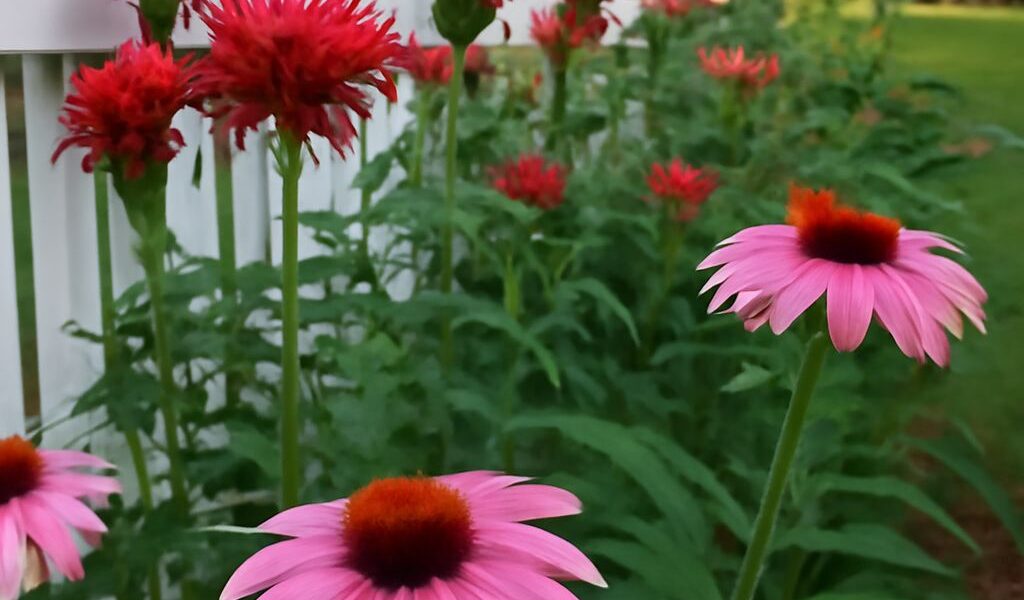
A coneflower is easy to recognize by its drooping, daisy-like petals surrounding a stiff, raised central cone. The common purple coneflower, Echinacea purpurea, has pink-purple petals, while cultivars may flower in white, orange, yellow, or other colors. Plants generally stand 2 to 4 feet tall and bloom from early summer into fall when we remove spent flowers.
Plant coneflowers in full sun and average, well-drained soil. They tolerate poorer soil and short dry periods better than bee balm or swamp milkweed once established, provided the soil does not remain waterlogged. Water deeply during the first season, then water when extended drought causes visible stress. Excess fertilizer can produce floppy growth, so compost worked into poor soil is usually more useful than heavy feeding.
Most coneflowers form upright clumps rather than spreading aggressively. Give them roughly 18 to 24 inches of room, or more for tall cultivars. Bees and butterflies use the flowers for nectar and pollen, while the seed-filled cones feed finches and other birds if we leave them standing into winter. The dried stems also provide shelter for some overwintering insects, so we can cut them back in late winter instead of fall.
Swamp milkweed: moisture needs, bloom, and wildlife value
Swamp milkweed (Asclepias incarnata) is an upright, usually 3- to 5-foot perennial with narrow leaves and rounded clusters of fragrant pink, rose, or white flowers. It typically blooms from midsummer into late summer. Despite its name, it does not require standing water; it prefers full sun and soil that stays reliably moist, such as a rain garden, pond edge, low spot, or damp meadow.
Improve drainage if water remains stagnant around the roots, but do not place this milkweed in a hot, dry bed unless we can provide regular irrigation. It can survive periods of average moisture after establishment, yet prolonged drought reduces vigor and flowering. Swamp milkweed grows as a substantial clump and may self-seed from its slender pods. Remove developing pods to limit seedlings, or leave them to expand a naturalized planting. Allow about 24 to 30 inches of space.
The plant’s wildlife role is unusually broad. Adult bees, butterflies, skippers, and hummingbirds visit the nectar-rich flower clusters. Monarch butterflies and several other milkweed-dependent species lay eggs on the foliage, and their caterpillars feed on the leaves. The seed pods later release silky, wind-dispersed seeds. Locate swamp milkweed where we can tolerate seasonal spread and occasional leaf damage from caterpillars.
Choosing and combining the three plants by site and season
We can choose among these plants by matching moisture first. For a sunny, moderately dry border, coneflowers are the strongest choice. For rich soil that stays evenly moist, bee balm adds height, fragrance, and a long run of tubular flowers. For a damp sunny area, swamp milkweed is the best fit and offers the essential host-plant function that the other two do not.
- Dry-to-average soil: Plant coneflowers, using compost only where soil is very poor and avoiding consistently wet sites.
- Moist, well-drained soil: Place bee balm toward the middle or back of a border, with enough air movement between plants.
- Seasonally wet soil: Use swamp milkweed in a rain garden or low area, where its deep roots and tall stems have room to develop.
Combining all three creates useful vertical and seasonal variation. Set swamp milkweed and bee balm toward the back, then place coneflowers in front or among shorter companions. Bee balm often begins the main summer display, coneflowers continue through late summer and fall, and swamp milkweed overlaps that period while supplying monarch host foliage. Leave some coneflower heads and milkweed pods through winter, but divide bee balm when its colony crowds neighboring plants.